
India from North to West
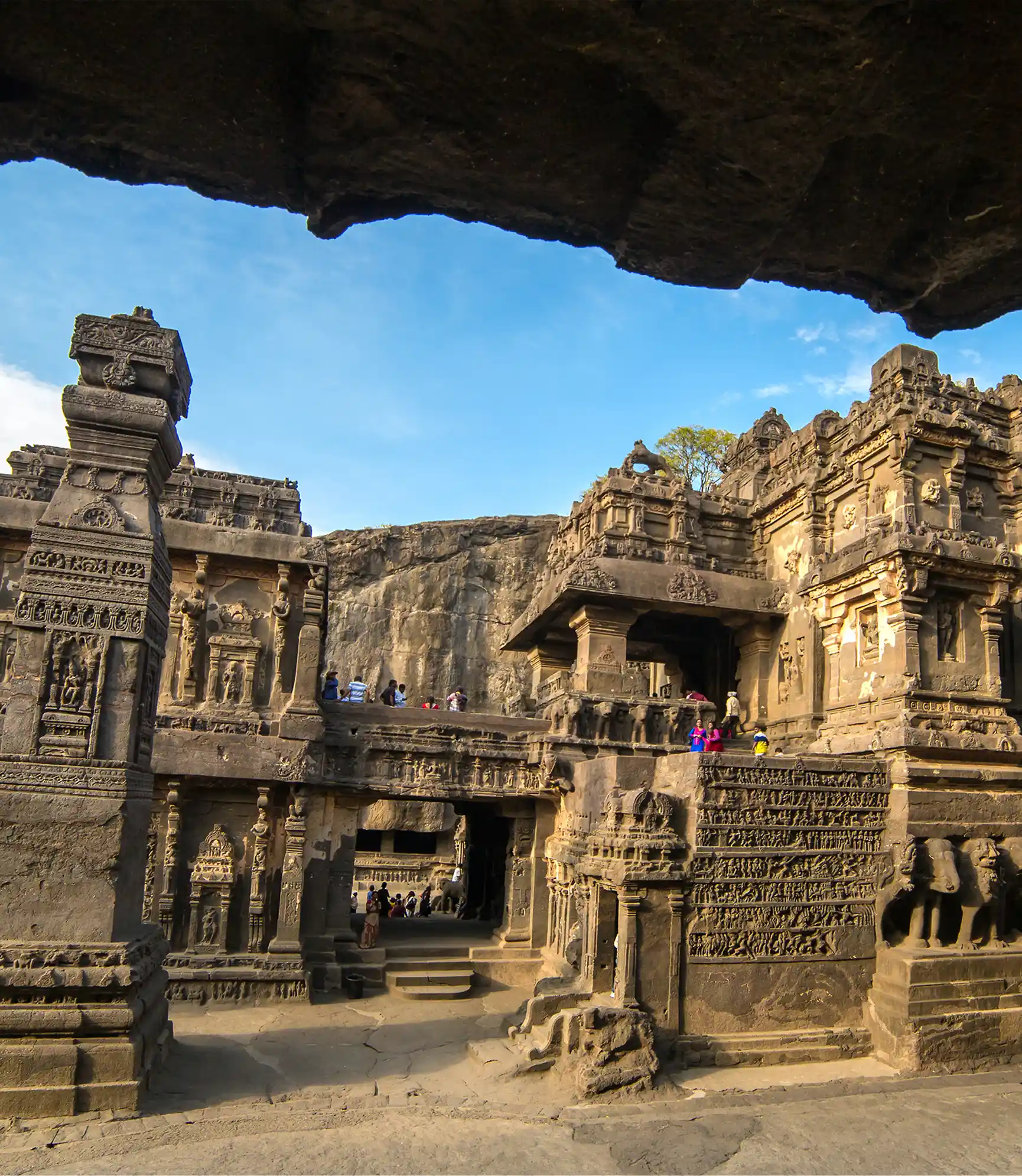
Marvelous 14 UNESCO World Heritage Sites incorporated in the tour are the major highlights. Witnessing the royalty like yesteryear in the state of Rajasthan kick starts our journey and takes us to Amer fort through an exciting elephant ride. We further land and relive the historic past of a city: Ahmadabad listed as a UNESCO World Heritage Site. This tour not only lets you live through the ancient history of India but also lets you explore the cultural side of it. Visiting the caves in Aurangabad gives an insight to the peaceful blend of Hinduism, Buddhism and Jainism seen at Ajanta & Elora. One can’t miss the marvel of love: Taj Mahal in Agra. This tour is a complete package wherein relaxation too is taken into consideration. Riding a boat at Lake Pichola is just one such activity that serves the needful.
-
Theme
Cultural, World Heritage tours, Yolo -
Destinations
India, North India, North East, West India, The Heart of India, Gujarat -
Cities Covered New Delhi, Agra, Fatehpur Sikri, Jaipur, Ajmer, Pushkar, Udaipur, Ahmedabad, Aurangabad, Mumbai
-
Ratings 1 Review5/5
-
Activity Level Moderate
-
Group Size Min Group Size: 1 |
Max Group Size: 9
Tour Highlights
The Aravalli Range running across the western border of India, accommodates for 14 UNESCO World Heritage Sites. The massive forts of Rajasthan at cliff tops, to the historic city of Ahmadabad and rock cut caves of Ajanta and Elora beautifully sums up the great ancient history India has witnessed.
From capital city-New Delhi to financial capital of India-Mumbai, many hidden gems are dug out on this tour. Join us along this amazing journey of exploring India from North to West.
World Heritage Sites
UNESCO-listed landmarks you will visit or explore on this itinerary.
14 sites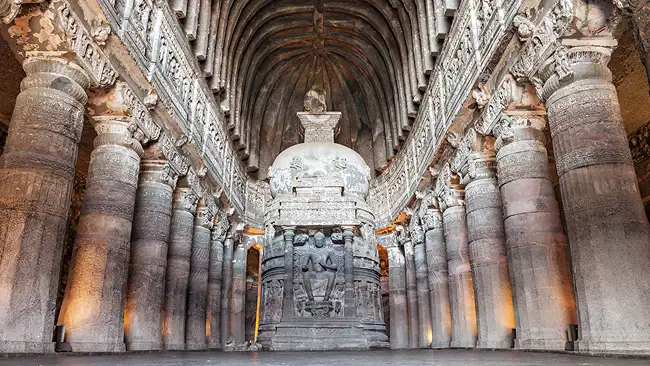

Western Ghats
Mumbai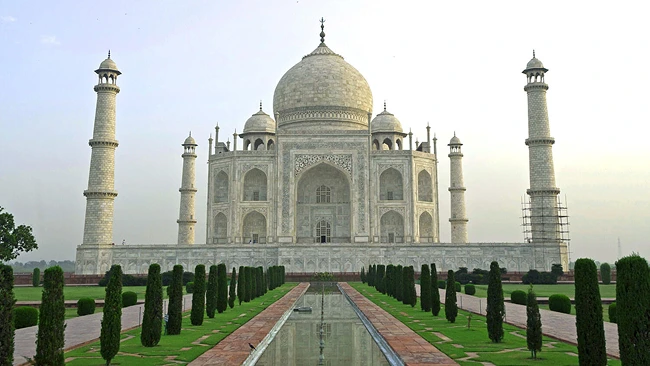
Tour Itinerary at Glance
| Day 1: | Arrive Delhi | |
| Day 2: | Delhi |
|
| Day 3: | Delhi-Agra (Drive: 220 Km/ 4 Hours) |
|
| Day 4: | Agra/ Fatehpur Sikri/ Jaipur (Drive: 245 Km/ 6 Hours) |
|
| Day 5: | Jaipur |
|
| Day 6: | Jaipur / Ajmer / Pushkar (Drive: 140 Km/ 3 Hours) |
|
| Day 7: | Pushkar-Udaipur (Drive: 280 Km/ 6 Hours) |
|
| Day 8: | Udaipur |
|
| Day 9: | Udaipur- Ahmedabad (Drive: 260 Km/ 6 Hours) |
|
| Day 10: | Ahmedabad |
|
| Day 11: | Ahmedabad-Mumbai: By Flight Mumbai – Aurangabad: By Flight |
|
| Day 12: | Aurangabad |
|
| Day 13: | Aurangabad- Mumbai By Flight |
|
| Day 14: | Mumbai |
|
| Day 15: | Mumbai/ Home |
|
- - Breakfast
- - Lunch
- - Dinner
The tour package inclusions and exclusions
The tour package booking terms and conditions
Before you book a trip with “Bestway2india.com”- An online trading entity of Bestway Tours and Safaris Pvt Ltd , please take the time to read and understand the booking terms and conditions & additional special conditions which apply to certain trips ,themes and promotional offers. These booking conditions form the basis of your contract with “Bestway Tours & Safaris Pvt. Ltd, Suite 403, Suncity Trade Tower, Sector 21, Gurgaon (National Capital Region), Haryana – 122016, (India) , A company incorporated under Indian companies ACT 1956 vide registration number 55-51646
By asking us to confirm your booking, you confirm that you have had the opportunity to read and have read these booking conditions, Essential trip information, Inclusions & Exclusions and cancellation & refund policy and agree to be bound by them.
These booking conditions only apply to holiday arrangements which you book with us on https://www.bestway2india.com (An online trading entity of Bestway Tours & Safaris Pvt Ltd) and which we agree to make , provide, or perform (as applicable) as part of our contract with you. All references in these booking conditions, to “holiday”, “booking”, “contract”, “package”, “tour” or “arrangements” mean such holiday arrangements unless otherwise stated.
Essential Trip Information
Booking Deposit, Cancellation and Refund Policy
Expand All
-
Day 1 - Arrive Delhi
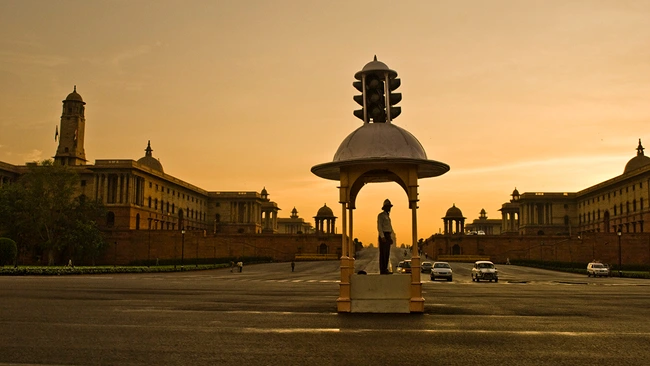 Arrival. Namaste! We are warmly welcomed the traditional Indian way with hands clapped together at the airport and transferred to our hotel. Rest of the day is free
-
Day 2 - Delhi
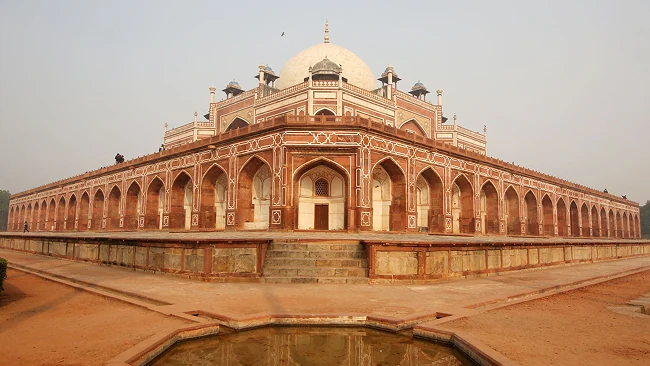
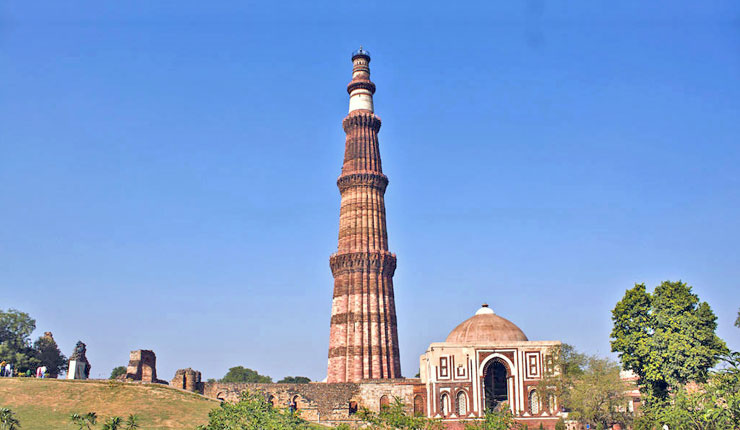
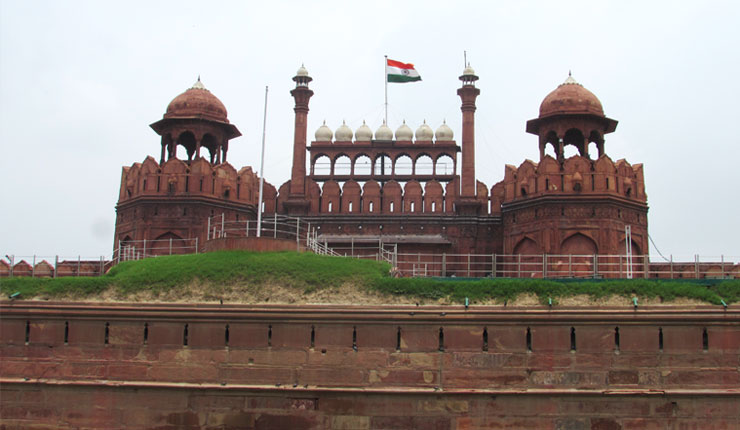
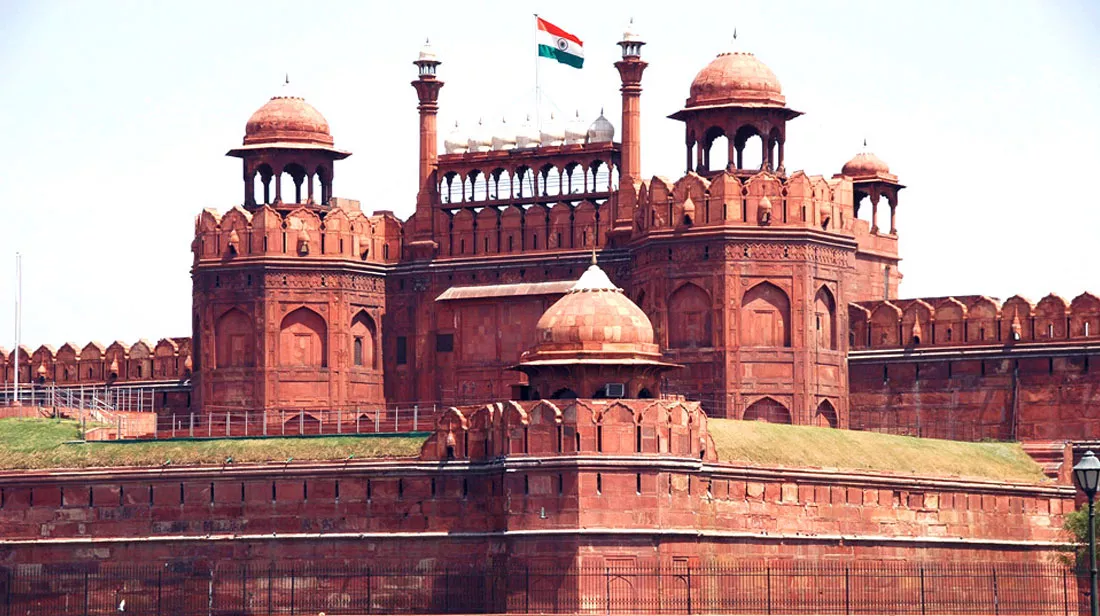 We start our morning tour with New Delhi and visit Birla House, the Former Residence of Mahatma Gandhi before he was assassinated by Nathu Ram Godse on January 30, 1948. Later we visit the famous India Gate followed by the Houses of Parliament, Connaught Place and Humayun's Tomb*, the first garden-tomb on the Indian subcontinent, built in 1570. We continue to Qutb Minar and its Monuments* Built in the early 13th century the red sandstone tower of Qutb Minar is 72.5 m high. The surrounding archaeological area contains funerary buildings, notably the magnificent Alai-Darwaza Gate, a masterpiece of Indo-Muslim art and two mosques. Our afternoon concentrates on Old Delhi, starting with the Red Fort Complex*. Named for its massive enclosing walls of red sandstone, it is adjacent to an older fort, the Salimgarh, built by Islam Shah Suri in 1546, with which it forms the Red Fort Complex. The Red Fort is considered to represent the zenith of Mughal creativity which, under the Shah Jahan, was brought to a new level of refinement and each pavilion reveals architectural elements typical of Mughal building, reflecting a fusion of Persian, Timurid and Hindu traditions. After visiting the Red fort, we embark on a captivating journey on a Rickshaw passing through the narrow lanes of the famous Chandni Chowk Bazaar, it was originally built by Mughal Emperor Shah Jehan for his daughter Jahan Ara in 17th Century since then many changes have taken place however it still remains Old Delhi's one of the Oldest and busiest markets in Delhi. Finally end our rickshaw ride at Jama Masjid, Mughal majesty and India's largest mosque. After visiting the mosque we proceed to Raj Ghat, the cremation site of Mahatma Gandhi.
Please Note: Red fort and Birla House are closed on Monday and Chandni Chowk is closed on Sunday
Meals Included
We start our morning tour with New Delhi and visit Birla House, the Former Residence of Mahatma Gandhi before he was assassinated by Nathu Ram Godse on January 30, 1948. Later we visit the famous India Gate followed by the Houses of Parliament, Connaught Place and Humayun's Tomb*, the first garden-tomb on the Indian subcontinent, built in 1570. We continue to Qutb Minar and its Monuments* Built in the early 13th century the red sandstone tower of Qutb Minar is 72.5 m high. The surrounding archaeological area contains funerary buildings, notably the magnificent Alai-Darwaza Gate, a masterpiece of Indo-Muslim art and two mosques. Our afternoon concentrates on Old Delhi, starting with the Red Fort Complex*. Named for its massive enclosing walls of red sandstone, it is adjacent to an older fort, the Salimgarh, built by Islam Shah Suri in 1546, with which it forms the Red Fort Complex. The Red Fort is considered to represent the zenith of Mughal creativity which, under the Shah Jahan, was brought to a new level of refinement and each pavilion reveals architectural elements typical of Mughal building, reflecting a fusion of Persian, Timurid and Hindu traditions. After visiting the Red fort, we embark on a captivating journey on a Rickshaw passing through the narrow lanes of the famous Chandni Chowk Bazaar, it was originally built by Mughal Emperor Shah Jehan for his daughter Jahan Ara in 17th Century since then many changes have taken place however it still remains Old Delhi's one of the Oldest and busiest markets in Delhi. Finally end our rickshaw ride at Jama Masjid, Mughal majesty and India's largest mosque. After visiting the mosque we proceed to Raj Ghat, the cremation site of Mahatma Gandhi.
Please Note: Red fort and Birla House are closed on Monday and Chandni Chowk is closed on Sunday
Meals Included-
Breakfast
-
-
Day 3 - Delhi-Agra (Drive: 220 Km/ 4 Hours)
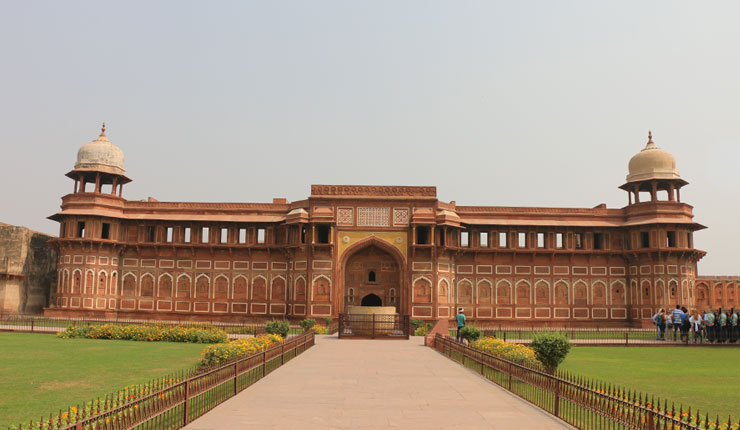
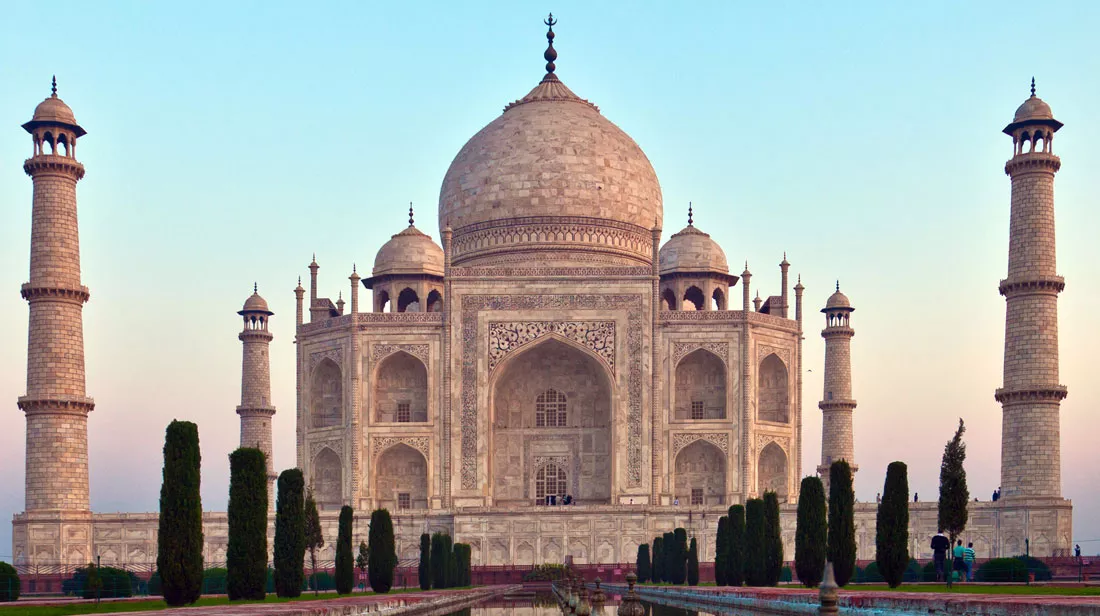 In the morning after breakfast we drive to Agra. On arrival we check in our hotel. In the afternoon we visit to one of the most well-known wonders of the world, the Taj Mahal*. An immense mausoleum of white marble, built in Agra between 1631 and 1648 by order of the Mughal emperor Shah Jahan in memory of his favourite wife, the Taj Mahal is the jewel of Muslim art in India and one of the universally admired masterpieces of the world's heritage. Situated on the right bank of the Yamuna in a vast Mogul garden, this funerary monument combines elements and styles of Persian, Central Asian and Islamic architecture. Later we visit Agra Fort*. This powerful fortress of red sandstone encompasses, within its 2.5-km-long enclosure walls, the imperial city of the Mughal rulers. It comprises many fairy-tale palaces, such as the Jahangir Palace and the Khas Mahal, built by Shah Jahan; audience halls, such as the Diwan-i-Khas; and two very beautiful mosques. We end our tour with a visit to some of the local factories famous for inlay work on marbles and witness the complex art inlaying precious and semiprecious stones on the world famous Marbles from the mines of Makrana.
Please note, Taj Mahal remains closed on Friday.
Meals Included
In the morning after breakfast we drive to Agra. On arrival we check in our hotel. In the afternoon we visit to one of the most well-known wonders of the world, the Taj Mahal*. An immense mausoleum of white marble, built in Agra between 1631 and 1648 by order of the Mughal emperor Shah Jahan in memory of his favourite wife, the Taj Mahal is the jewel of Muslim art in India and one of the universally admired masterpieces of the world's heritage. Situated on the right bank of the Yamuna in a vast Mogul garden, this funerary monument combines elements and styles of Persian, Central Asian and Islamic architecture. Later we visit Agra Fort*. This powerful fortress of red sandstone encompasses, within its 2.5-km-long enclosure walls, the imperial city of the Mughal rulers. It comprises many fairy-tale palaces, such as the Jahangir Palace and the Khas Mahal, built by Shah Jahan; audience halls, such as the Diwan-i-Khas; and two very beautiful mosques. We end our tour with a visit to some of the local factories famous for inlay work on marbles and witness the complex art inlaying precious and semiprecious stones on the world famous Marbles from the mines of Makrana.
Please note, Taj Mahal remains closed on Friday.
Meals Included-
Breakfast
-
-
Day 4 - Agra/ Fatehpur Sikri/ Jaipur (Drive: 245 Km/ 6 Hours)
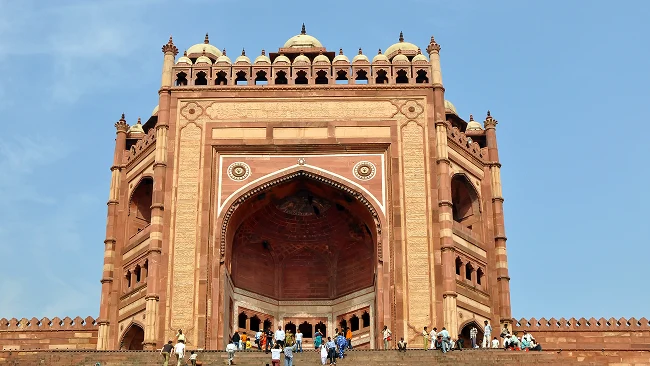
 A short drive gets us to Fatehpur Sikri. Built during the second half of the 16th century by the Emperor Akbar, the City of Victory was the capital of the Mughal Empire for only some 10 years. The complex of monuments and temples, all in a uniform architectural style, includes one of the largest mosques in India, the Jama Masjid and the artistically designed mausoleum of the revered Sufi saint, Salim Chisty. From here we continue on a countryside drive to Jaipur, the rose pink capital of Rajasthan
Meals Included
A short drive gets us to Fatehpur Sikri. Built during the second half of the 16th century by the Emperor Akbar, the City of Victory was the capital of the Mughal Empire for only some 10 years. The complex of monuments and temples, all in a uniform architectural style, includes one of the largest mosques in India, the Jama Masjid and the artistically designed mausoleum of the revered Sufi saint, Salim Chisty. From here we continue on a countryside drive to Jaipur, the rose pink capital of Rajasthan
Meals Included-
Breakfast
-
-
Day 5 - Jaipur
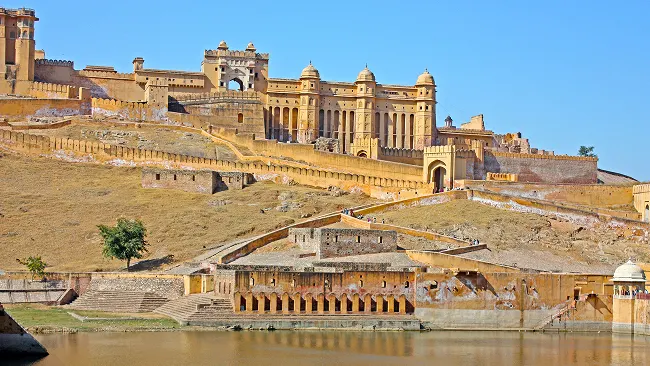
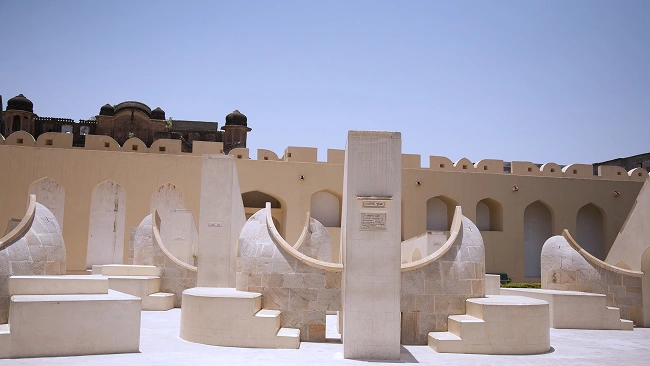
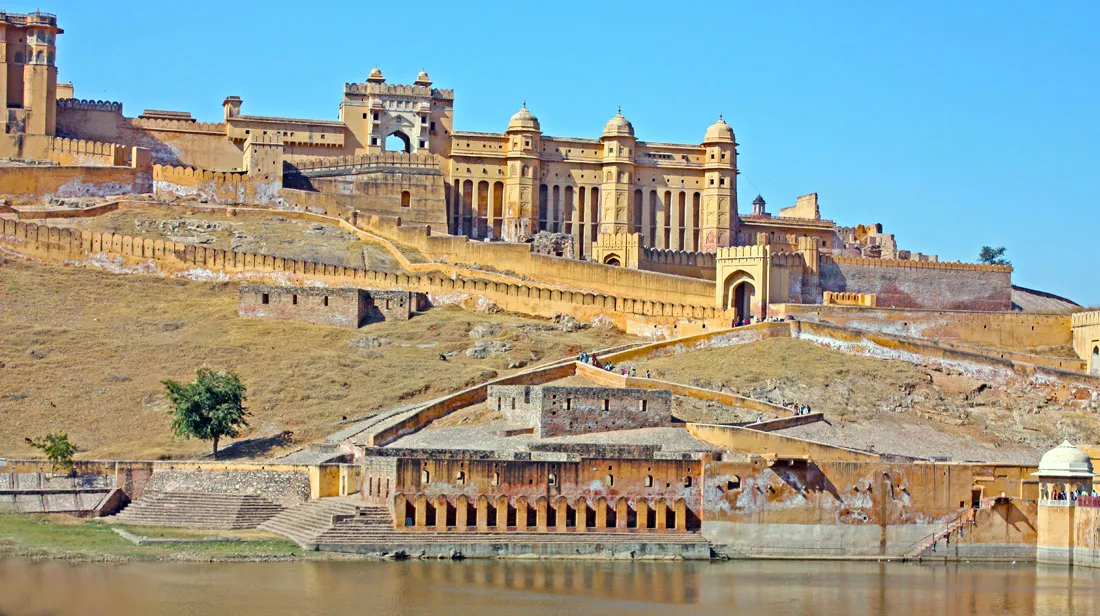 This morning we take a Jeep Ride uphill to the intriguing Amber Palace, a distinguished example of 17th Century Rajput architecture. Located in a valley formed by a range of Aravallis known as Kalikho hills. The Palace and Fort are located on top of the hill with the city on slopes, and the valley protected by fort walls with four gates in the four cardinal directions. The construction of the fort began in 1592. It shows the evolution from the purely defensive fort settlements of the early medieval period to the palace fortress type of architecture typified in the 16th century. This palace fortress was never attacked or invaded. The fort comprises of number of gardens, courtyards and palatial spaces derived from Mughal architecture and are a distinguished example of 17th Century Rajput architecture. We return to Jaipur and experience the art of carpet weaving & block printing. Later we visit the majestic City Palace, which houses a rare collection of Indian art and the beautiful Hawa Mahal, the Palace of Winds, where the ladies of the royal harem used to watch the city from behind the intricately carved facade. We also visit the Jantar Mantar*, an astronomical observation site built in the early 18th century that includes a set of some 20 main fixed instruments designed for the observation of astronomical positions with the naked eye. It is an expression of the astronomical skills and cosmological concepts of the court of a scholarly prince at the end of the Mughal period. The evening is free to enjoy both shopping and the cultural experience in the bazaars. Jaipur is noted for its craftsmen, skilled in brass inlay, lacquer work and stone setting
Meals Included
This morning we take a Jeep Ride uphill to the intriguing Amber Palace, a distinguished example of 17th Century Rajput architecture. Located in a valley formed by a range of Aravallis known as Kalikho hills. The Palace and Fort are located on top of the hill with the city on slopes, and the valley protected by fort walls with four gates in the four cardinal directions. The construction of the fort began in 1592. It shows the evolution from the purely defensive fort settlements of the early medieval period to the palace fortress type of architecture typified in the 16th century. This palace fortress was never attacked or invaded. The fort comprises of number of gardens, courtyards and palatial spaces derived from Mughal architecture and are a distinguished example of 17th Century Rajput architecture. We return to Jaipur and experience the art of carpet weaving & block printing. Later we visit the majestic City Palace, which houses a rare collection of Indian art and the beautiful Hawa Mahal, the Palace of Winds, where the ladies of the royal harem used to watch the city from behind the intricately carved facade. We also visit the Jantar Mantar*, an astronomical observation site built in the early 18th century that includes a set of some 20 main fixed instruments designed for the observation of astronomical positions with the naked eye. It is an expression of the astronomical skills and cosmological concepts of the court of a scholarly prince at the end of the Mughal period. The evening is free to enjoy both shopping and the cultural experience in the bazaars. Jaipur is noted for its craftsmen, skilled in brass inlay, lacquer work and stone setting
Meals Included-
Breakfast
-
-
Day 6 - Jaipur / Ajmer / Pushkar (Drive: 140 Km/ 3 Hours)
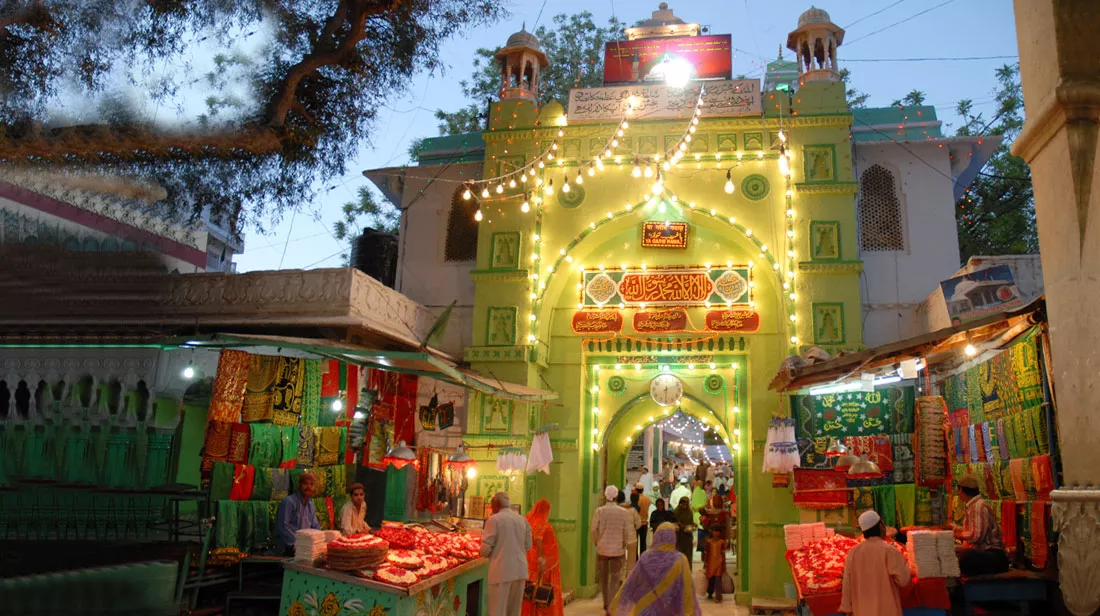 Today we drive to Pushkar en-route visiting the Dargah of Sufi Saint Khawaja Muin-ud-din Chisti. The Dargah at the foot of a barren hill is situated India's most important pilgrimage center for people from all faiths.
Upon arrival we check-in our hotel. Pushkar, a bewitching little town on the edge of the desert, with temples, bathing Ghats, onion domes and chalk-coloured buildings clustering around its holy lake, which is said to have appeared when Brahma dropped a lotus flower. It's an important pilgrimage centre and we shall see plenty of Sadhus. Pushkar has some temples, though few are as ancient as you might expect at such an important pilgrimage site, since many were destroyed by Aurangzeb and subsequently rebuilt. We visit the famous temple of Lord Brahma Temple, said to be one of the few temples in the world dedicated to this deity
Meals Included
Today we drive to Pushkar en-route visiting the Dargah of Sufi Saint Khawaja Muin-ud-din Chisti. The Dargah at the foot of a barren hill is situated India's most important pilgrimage center for people from all faiths.
Upon arrival we check-in our hotel. Pushkar, a bewitching little town on the edge of the desert, with temples, bathing Ghats, onion domes and chalk-coloured buildings clustering around its holy lake, which is said to have appeared when Brahma dropped a lotus flower. It's an important pilgrimage centre and we shall see plenty of Sadhus. Pushkar has some temples, though few are as ancient as you might expect at such an important pilgrimage site, since many were destroyed by Aurangzeb and subsequently rebuilt. We visit the famous temple of Lord Brahma Temple, said to be one of the few temples in the world dedicated to this deity
Meals Included-
Breakfast
-
-
Day 7 - Pushkar-Udaipur (Drive: 280 Km/ 6 Hours)
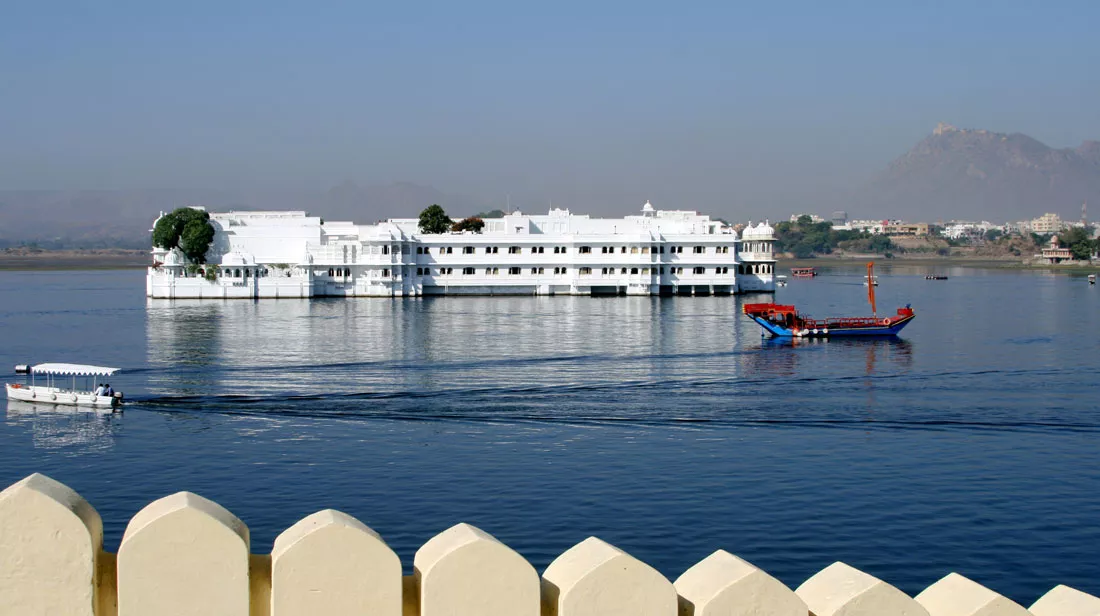 In the morning after breakfast we drive through the fascinating countryside of Rajasthan to Udaipur. Udaipur was the historic capital of the former kingdom of Mewar and no other city in Rajasthan is quite as romantic. Misty ochre-shadowed hills and pale, intricate buildings encircle beautiful Lake Pichola. On arrival we check in our hotel. Remainder of the day is free
Meals Included
In the morning after breakfast we drive through the fascinating countryside of Rajasthan to Udaipur. Udaipur was the historic capital of the former kingdom of Mewar and no other city in Rajasthan is quite as romantic. Misty ochre-shadowed hills and pale, intricate buildings encircle beautiful Lake Pichola. On arrival we check in our hotel. Remainder of the day is free
Meals Included-
Breakfast
-
-
Day 8 - Udaipur
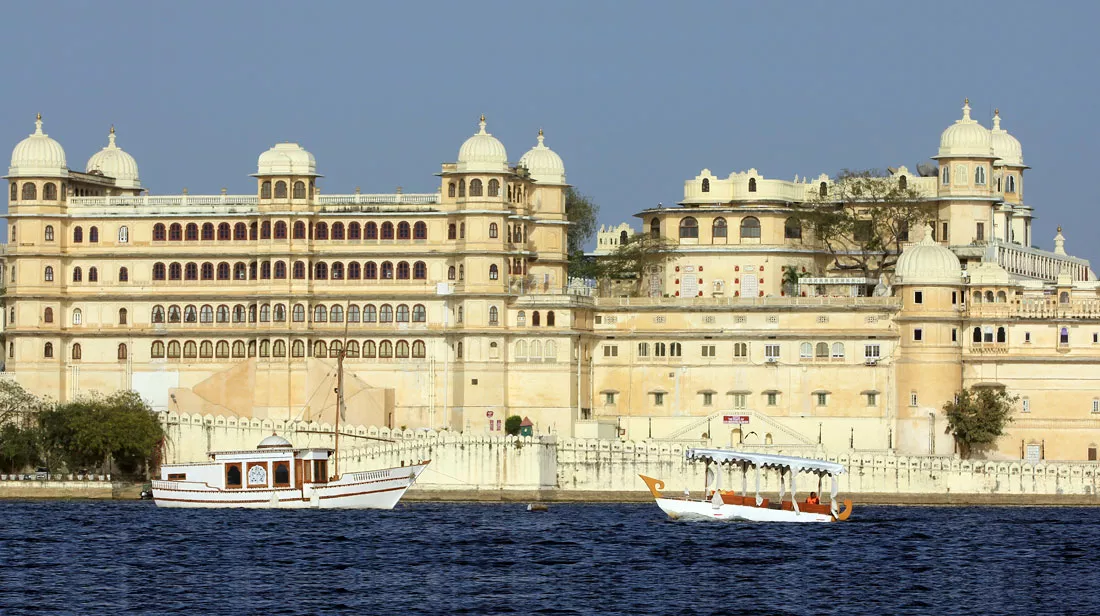 We start our experience of Udaipur by visiting the City Palace. The palace has several architectural and artistic highlights such as the Mor Chowk, known for its stunning peacock mosaics and the Bhim Vilas Palace with its series of lovely wall paintings. From the City Palace we can see the Lake Place, shimmering like a jewel in Lake Pichola. Later we visit the Jagdish Temple, Fateh Sagar Lake and Saheliyon Ki Bari, the Garden of Maids. We end our tour of Udaipur with a boat ride at Lake Pichola and visit Jag Mandir, a palace built on an island in 1551. The royal family used the palace as a summer resort and pleasure palace for holding parties.
Meals Included
We start our experience of Udaipur by visiting the City Palace. The palace has several architectural and artistic highlights such as the Mor Chowk, known for its stunning peacock mosaics and the Bhim Vilas Palace with its series of lovely wall paintings. From the City Palace we can see the Lake Place, shimmering like a jewel in Lake Pichola. Later we visit the Jagdish Temple, Fateh Sagar Lake and Saheliyon Ki Bari, the Garden of Maids. We end our tour of Udaipur with a boat ride at Lake Pichola and visit Jag Mandir, a palace built on an island in 1551. The royal family used the palace as a summer resort and pleasure palace for holding parties.
Meals Included-
Breakfast
-
-
Day 9 - Udaipur- Ahmedabad (Drive: 260 Km/ 6 Hours)
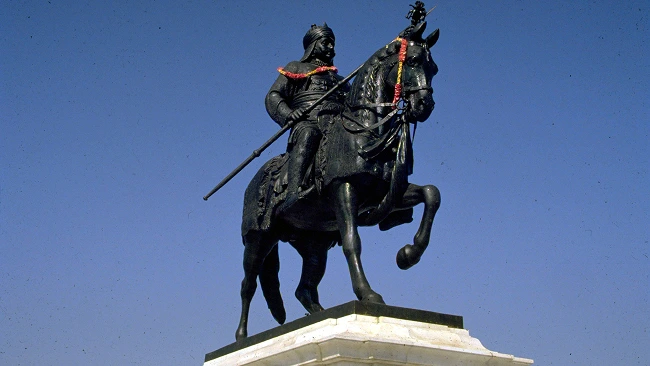 In the morning after breakfast we drive to Ahmedabad. On arrival we check in our hotel. Rest of the day is free for personal activities
Meals Included
In the morning after breakfast we drive to Ahmedabad. On arrival we check in our hotel. Rest of the day is free for personal activities
Meals Included-
Breakfast
-
-
Day 10 - Ahmedabad
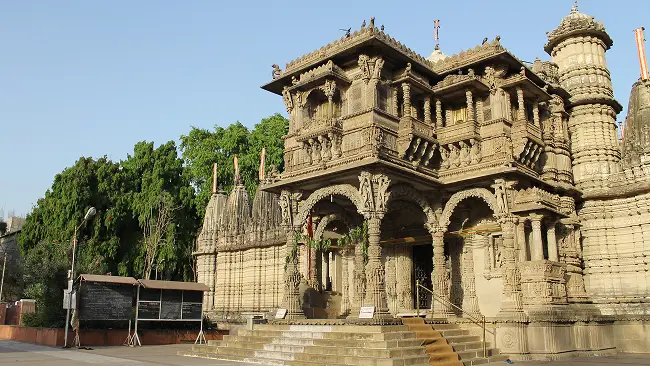
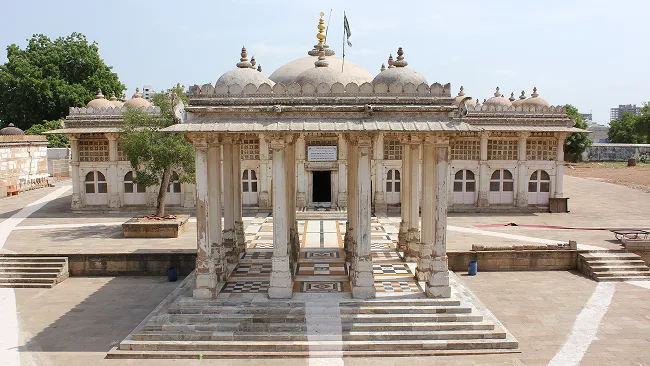
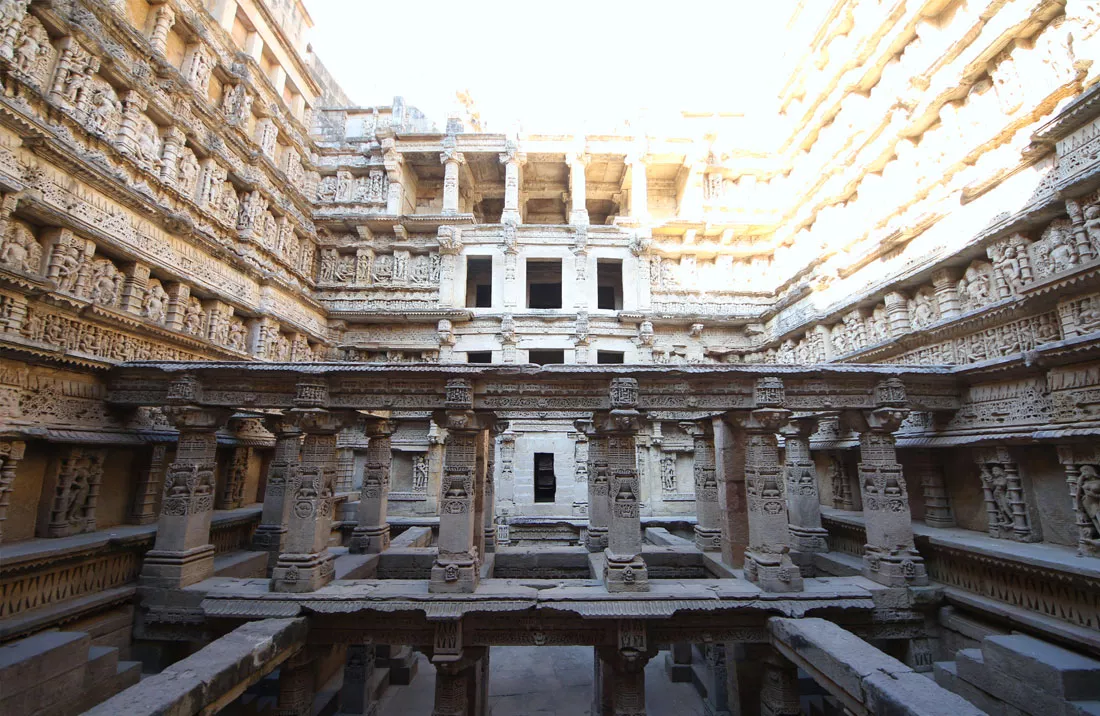 In the morning we take a tour of Ahmedabad. We start our tour with visit to Gandhi’s Sabarmati Ashram. Sabarmati Ashram formerly known as Satyagraha Ashram was witness to many historical events that shook up the British Rule in India. It is situated about 5 km from the center of Ahmedabad, (Gujarat State), on the west bank of Sabarmati River. The Ashram premises houses a museum, which has five units – office, library, two photo galleries and an auditorium. It is has the largest number of original manuscripts of Gandhiji’s letters and articles. Next we visit to Siddhi Sayad Masjid, Swaminarayan Temple and other monuments of Ahmedabad. Rest of Day is free.
Meals Included
In the morning we take a tour of Ahmedabad. We start our tour with visit to Gandhi’s Sabarmati Ashram. Sabarmati Ashram formerly known as Satyagraha Ashram was witness to many historical events that shook up the British Rule in India. It is situated about 5 km from the center of Ahmedabad, (Gujarat State), on the west bank of Sabarmati River. The Ashram premises houses a museum, which has five units – office, library, two photo galleries and an auditorium. It is has the largest number of original manuscripts of Gandhiji’s letters and articles. Next we visit to Siddhi Sayad Masjid, Swaminarayan Temple and other monuments of Ahmedabad. Rest of Day is free.
Meals Included-
Breakfast
-
-
Day 11 - Ahmedabad-Mumbai: By Flight Mumbai – Aurangabad: By Flight
 Today we are transferred to airport for our flight to Mumbai. In Mumbai we take our connecting flight to Aurangabad. On arrival in Aurangabad we are transferred to our hotel.
Meals Included
Today we are transferred to airport for our flight to Mumbai. In Mumbai we take our connecting flight to Aurangabad. On arrival in Aurangabad we are transferred to our hotel.
Meals Included-
Breakfast
-
-
Day 12 - Aurangabad
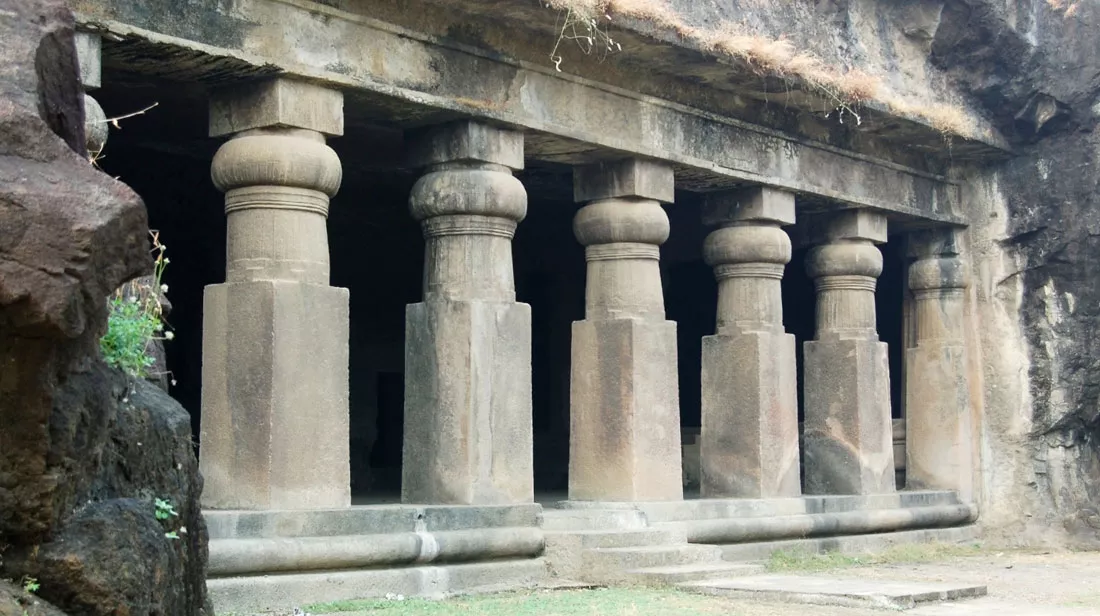 Today we take full day excursion to Ajanta Caves*. The first Buddhist cave monuments at Ajanta date from the 2nd and 1st centuries B.C. During the Gupta period (5th and 6th centuries A.D.), many more richly decorated caves were added to the original group. The series of paintings at Ajanta that cover the walls and ceilings are unparalleled in the history of Indian Art, both for the wide range of subjects illustrated and the assured mastery of the medium. The paintings and sculptures of Ajanta are considered masterpieces of Buddhist religious art.
Please Note: Ajanta Caves are closed on Mondays.
Meals Included
Today we take full day excursion to Ajanta Caves*. The first Buddhist cave monuments at Ajanta date from the 2nd and 1st centuries B.C. During the Gupta period (5th and 6th centuries A.D.), many more richly decorated caves were added to the original group. The series of paintings at Ajanta that cover the walls and ceilings are unparalleled in the history of Indian Art, both for the wide range of subjects illustrated and the assured mastery of the medium. The paintings and sculptures of Ajanta are considered masterpieces of Buddhist religious art.
Please Note: Ajanta Caves are closed on Mondays.
Meals Included-
Breakfast
-
-
Day 13 - Aurangabad- Mumbai By Flight
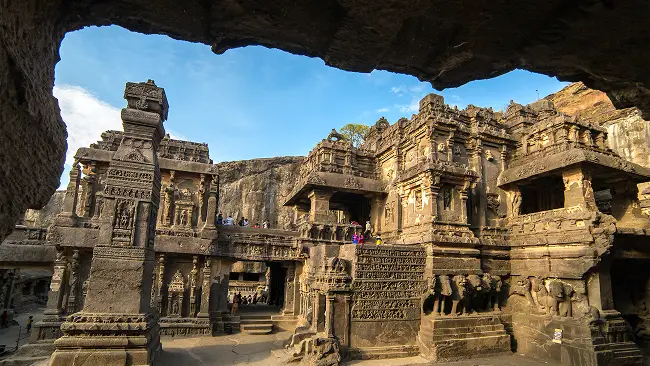
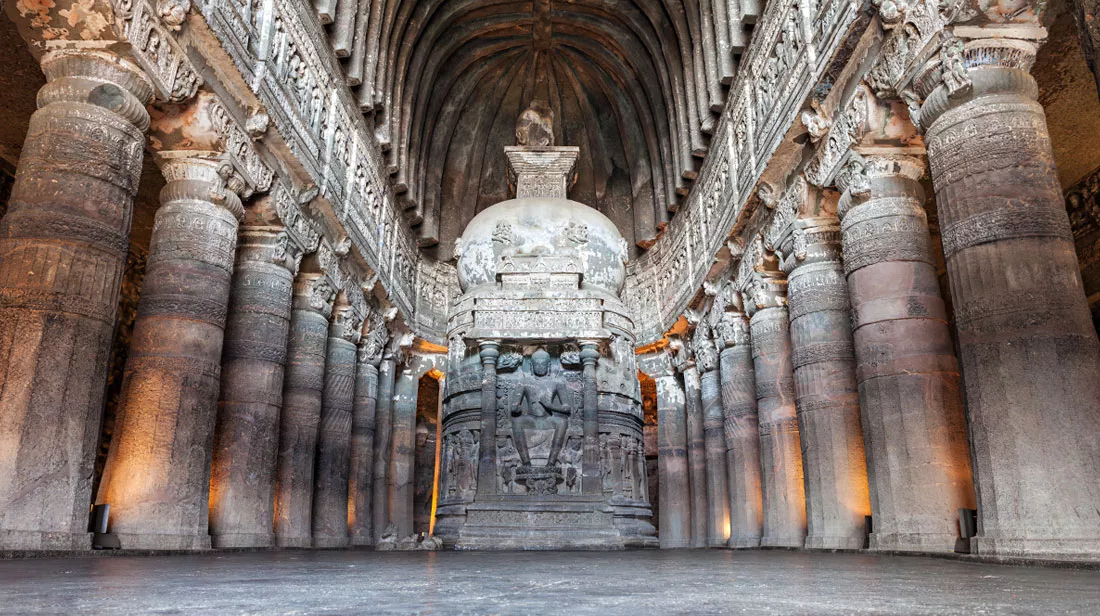 In the morning we visit Ellora Caves*. These 34 monasteries and temples, extending over more than 2 km, were dug side by side in the wall of a high basalt cliff. The uninterrupted sequence of monuments dates from A.D. 600 to 1000 and brings the civilization of ancient India to life. Later we also visit the Daulatabad fort and Bibi-Ka-Maqbra, the beautiful mausoleum of Rabia-ul-Daurani, wife of the Mughal Emperor Aurangazeb.
In the evening we are transferred to airport for our flight to Mumbai. On arrival in Mumbai we are transferred to our hotel.
Please Note: Ellora Caves are closed on Tuesdays
Meals Included
In the morning we visit Ellora Caves*. These 34 monasteries and temples, extending over more than 2 km, were dug side by side in the wall of a high basalt cliff. The uninterrupted sequence of monuments dates from A.D. 600 to 1000 and brings the civilization of ancient India to life. Later we also visit the Daulatabad fort and Bibi-Ka-Maqbra, the beautiful mausoleum of Rabia-ul-Daurani, wife of the Mughal Emperor Aurangazeb.
In the evening we are transferred to airport for our flight to Mumbai. On arrival in Mumbai we are transferred to our hotel.
Please Note: Ellora Caves are closed on Tuesdays
Meals Included-
Breakfast
-
-
Day 14 - Mumbai
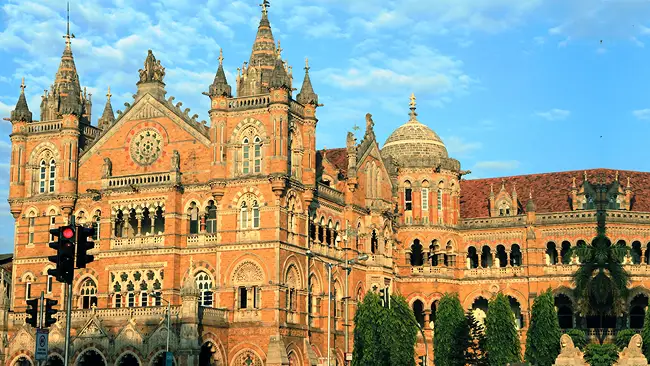
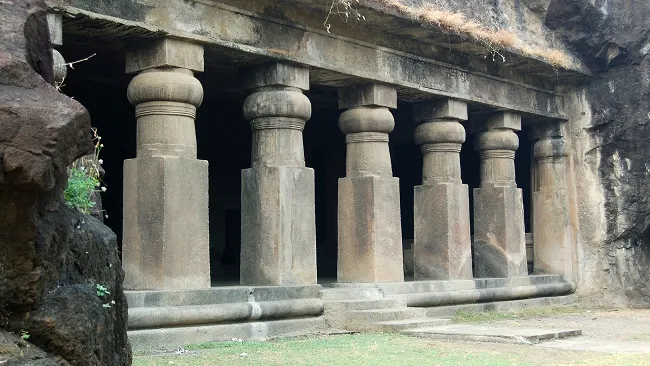
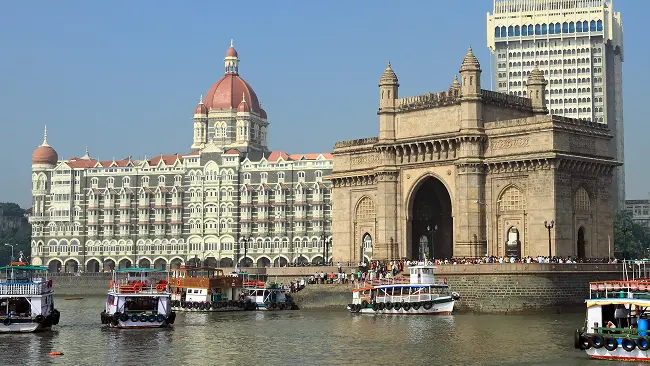
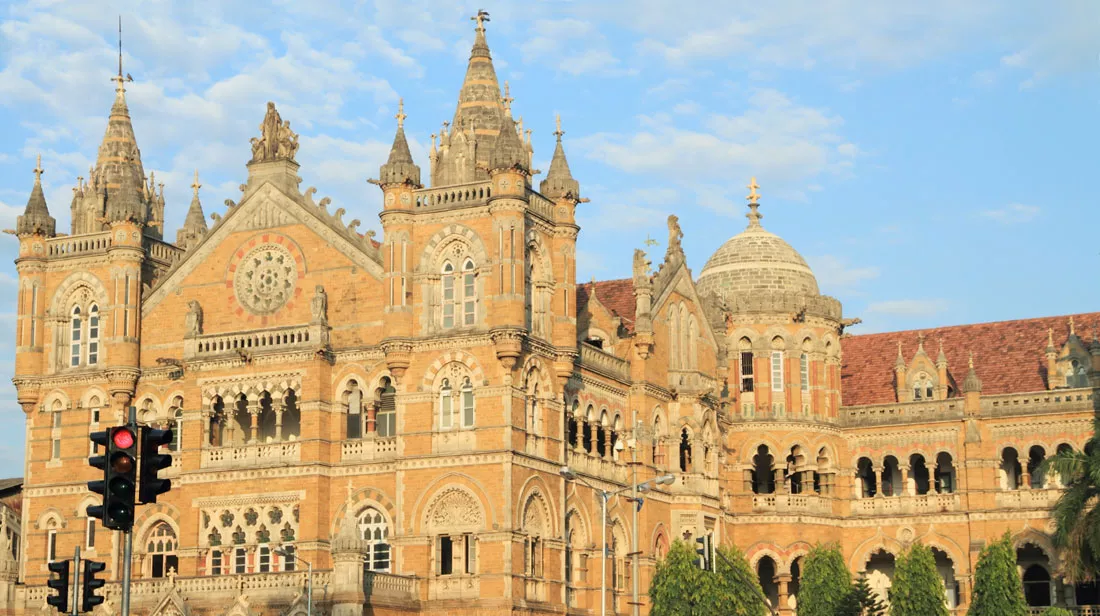 We start our day with a visit to the Gateway of India, Mumbai's most famous monument. Here we embark on our excursion to the Elephanta Caves*, located on an island in the Sea of Oman. The caves contain a collection of rock art linked to the cult of Shiva. Here, Indian art has found one of its most perfect expressions, particularly the huge high reliefs in the main cave. We return to Mumbai by motor launch and visit the Prince of Wales Museum and Chhatrapati Shivaji Terminus*, formerly known as Victoria Terminus Station, an outstanding example of Victorian Gothic Revival Architecture in India, blended with themes deriving from Indian traditional architecture. The building, designed by the British architect F. W. Stevens, became the symbol of Bombay as the 'Gothic City' and the major international mercantile port of India. Its remarkable stone dome, turrets, pointed arches and eccentric ground plan are close to traditional Indian palace architecture. Our Next Stop is at Mani Bhawan, where Mahatma Gandhi stayed here during the Freedom Struggle. The house is now converted into a Museum. From here we leave for the Jain Temple and Hanging Gardens, the Zoroastrian Towers of Silence, the bustling Crawford Market and drive past Haji Ali, the tomb of a wealthy Muslim merchant. We end our tour at the Dhobi Ghat, the world's largest outdoor laundry. The word Dhobi Ghat is used all over India to refer to any place where many washers are present.
Please Note: Elephanta Caves is closed on Mondays.
Meals Included
We start our day with a visit to the Gateway of India, Mumbai's most famous monument. Here we embark on our excursion to the Elephanta Caves*, located on an island in the Sea of Oman. The caves contain a collection of rock art linked to the cult of Shiva. Here, Indian art has found one of its most perfect expressions, particularly the huge high reliefs in the main cave. We return to Mumbai by motor launch and visit the Prince of Wales Museum and Chhatrapati Shivaji Terminus*, formerly known as Victoria Terminus Station, an outstanding example of Victorian Gothic Revival Architecture in India, blended with themes deriving from Indian traditional architecture. The building, designed by the British architect F. W. Stevens, became the symbol of Bombay as the 'Gothic City' and the major international mercantile port of India. Its remarkable stone dome, turrets, pointed arches and eccentric ground plan are close to traditional Indian palace architecture. Our Next Stop is at Mani Bhawan, where Mahatma Gandhi stayed here during the Freedom Struggle. The house is now converted into a Museum. From here we leave for the Jain Temple and Hanging Gardens, the Zoroastrian Towers of Silence, the bustling Crawford Market and drive past Haji Ali, the tomb of a wealthy Muslim merchant. We end our tour at the Dhobi Ghat, the world's largest outdoor laundry. The word Dhobi Ghat is used all over India to refer to any place where many washers are present.
Please Note: Elephanta Caves is closed on Mondays.
Meals Included-
Breakfast
-
-
Day 15 - Mumbai/ Home
 After a memorable journey through incredible India, we are transferred to the airport for our departure home or to our next exciting destination
Meals Included
After a memorable journey through incredible India, we are transferred to the airport for our departure home or to our next exciting destination
Meals Included-
Breakfast
-
- - Breakfast
- - Lunch
- - Dinner
* DENOTES UNESCO WORLD HERITAGE SITES INCLUDED
 Loading accommodation…
Frequently asked questions
Common questions about this tour — expand any item for details.
- 01 Is tipping included and if not, how much should I budget?
- 02 Can I book extra nights of hotel accommodation before or after my tour?
- 03 Who are my travelling companions?
- 04 How many people can join a tour?
- 05 What are the age restrictions on your tours?
- 06 I'm a single traveler, will I be charged a single supplement?
- 07 Can you provide me with a list of the hotels we will be staying at?
- 08 Can I join a tour late or leave it early?
- 09 Are airport transfers included?
- 10 What type of ground transportation is used on your tours?
- 11 Do your tours include international airfare?
- 12 What clothing should I pack for one of your tours?
- 13 What vaccinations are recommended for this tour?
- 14 What is the most appropriate type of luggage to bring?
Traveller reviews
What guests say about India from North to West.
Loading gallery…
Log in to view dates & prices
Please sign in or create an account to see departure dates, pricing, and book online.

Top Tours
Hand-picked journeys travellers loved most this season.
Loading top tours…
Wonderful trip
Apr 2018