
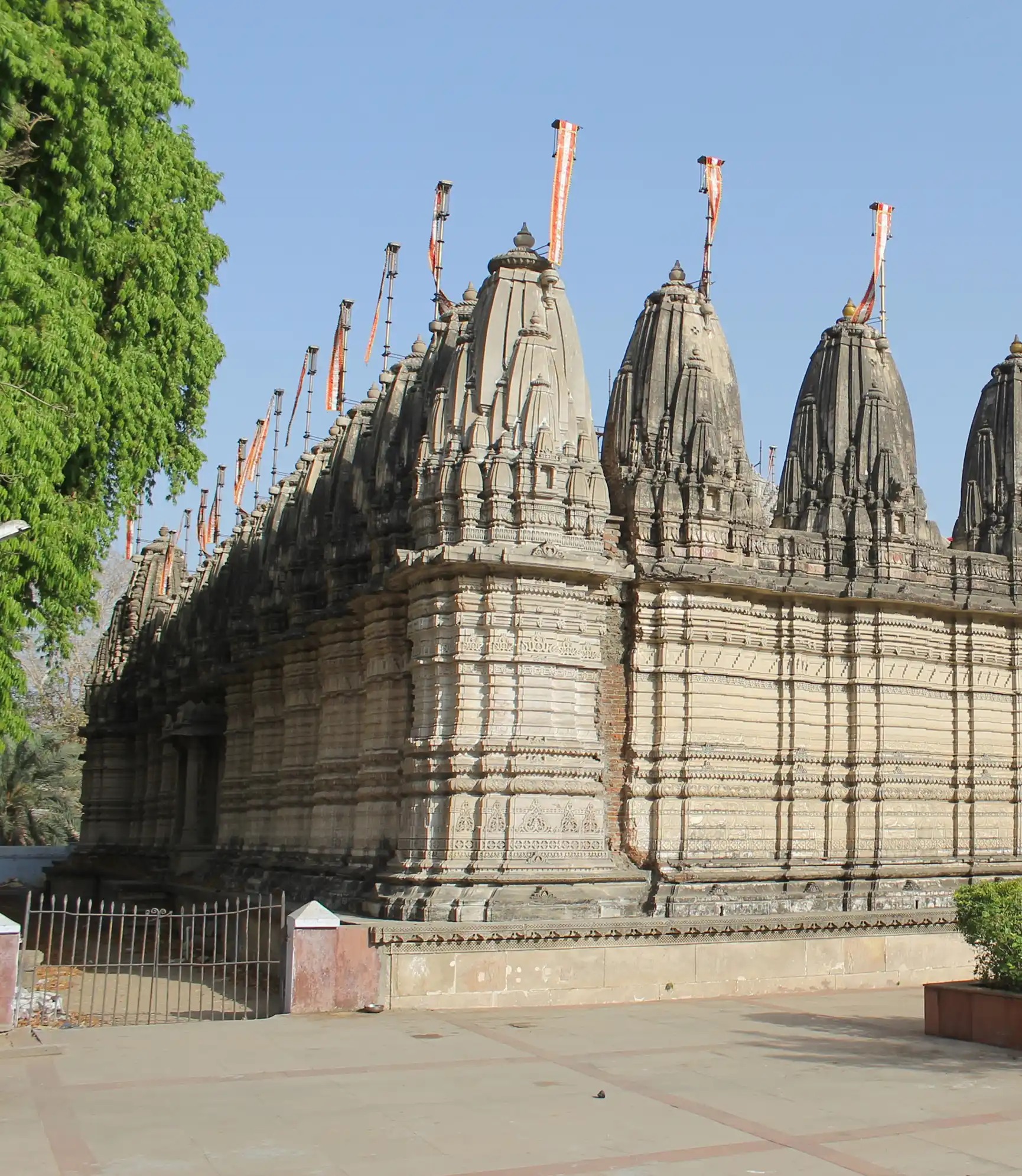
India's Western Heritage
Encapsulating treasures of Gujarat, charm of Mumbai, ethnicity of Madhya Pradesh; India’s Western Heritage paves way through 12 UNESCO listed World Heritage Site. We embark our journey in Delhi where we take a rickshaw ride through the sprawling streets of oldest bazaar- Chandni Chowk marking for an enduring experience. Witness the architectural jewels established by Mughal Empire in the city famously known for its white marble beauty: Taj Mahal. Tour to India is incomplete without a train journey. Ride from Delhi to Agra & Agra to Bhopal to jell-well with the locals. Jaunt through the city of mosques in Bhopal, textile center of Kutch in Bhujodi and witness Afghani architecture in Mandu. Adjourn the tour at the commercial capital city of India: Mumbai where the convergence of a slow and a fast-paced life can be witnessed along with the historic architecture built by the British government.
-
Theme
Cultural, World Heritage tours -
Destinations
India, North India, West India -
Cities Covered New Delhi, Agra, Bhopal, Ujjain, Indore, Mandu, Ahmedabad, Rajkot, Bhuj, Mumbai, Aurangabad
-
Ratings 1 Review5/5
-
Activity Level Moderate
-
Group Size Min Group Size: 1 |
Max Group Size: 9
Tour Highlights
Traveler who wants to have a glimpse of the major constituents of Indian history and culture; and is looking to jaunt through the western coast of India. This itinerary has been planned in a way that one will experience the British touches in New Delhi, Mughal charm in Agra, worldly acknowledged art work at Ajanta and Ellora caves and teeming city life of Mumbai.
Mystically cut out rock at Ajanta and Ellora, walled city of Bhuj, fabulous artisans and artistry at Kutch, reliving Gandhi’s life by jaunting through cities where he once lived, historic monuments of Sanchi, paintings dating back to 1st century BC in Bhimbetka caves and shimmery Kanch (glass) temple in Indore are cities incorporated in our Western Heritage Tour.
Explore and discover the secrets of India’s Western Heritage, a compact yet contrasting tour with unforgettable highlights.
World Heritage Sites
UNESCO-listed landmarks you will visit or explore on this itinerary.
11 sites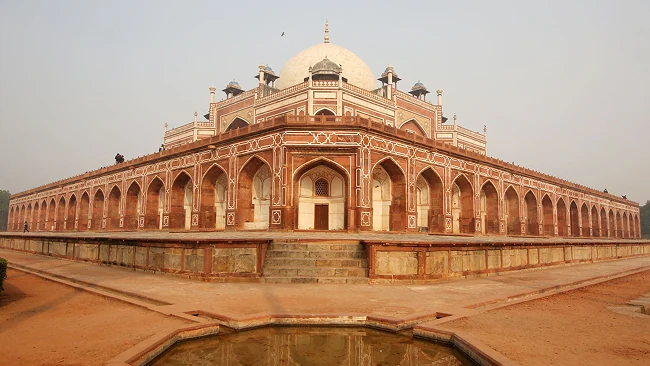
Tour Itinerary at Glance
| Day 1: | Arrive Delhi (Flight) |
| Day 2: | Delhi |
| Day 3: | : Delhi/Agra (Train) |
| Day 4: | Agra/Bhopal (Train) |
| Day 5: | Bhopal/Excursion to Sanchi & Bhimbetka |
| Day 6: | Bhopal/Ujjain/Indore (Drive 200 Kms / 04 Hrs) |
| Day 7: | : Indore/Mandu (Drive 100 Kms / 02 Hrs) |
| Day 8: | Mandu/Ahmedabad (Drive 370 Kms / 07 Hrs) |
| Day 9: | Ahmedabad |
| Day 10: | Ahmedabad/Rajkot (Drive 225 Kms / 04 Hrs) |
| Day 11: | Rajkot/Bhuj (Drive 250 Kms / 05 Hrs) |
| Day 12: | Bhuj |
| Day 13: | Bhuj/Mumbai/Aurangabad by Flight |
| Day 14: | Aurangabad |
| Day 15: | Aurangabad/Mumbai by Flight |
| Day 16: | Mumbai |
| Day 17: | Mumbai/Onward Destination (Flight) |
- - Breakfast
- - Lunch
- - Dinner
The tour package inclusions and exclusions
The tour package booking terms and conditions
Before you book a trip with “Bestway2india.com”- An online trading entity of Bestway Tours and Safaris Pvt Ltd , please take the time to read and understand the booking terms and conditions & additional special conditions which apply to certain trips ,themes and promotional offers. These booking conditions form the basis of your contract with “Bestway Tours & Safaris Pvt. Ltd, Suite 403, Suncity Trade Tower, Sector 21, Gurgaon (National Capital Region), Haryana – 122016, (India) , A company incorporated under Indian companies ACT 1956 vide registration number 55-51646
By asking us to confirm your booking, you confirm that you have had the opportunity to read and have read these booking conditions, Essential trip information, Inclusions & Exclusions and cancellation & refund policy and agree to be bound by them.
These booking conditions only apply to holiday arrangements which you book with us on https://www.bestway2india.com (An online trading entity of Bestway Tours & Safaris Pvt Ltd) and which we agree to make , provide, or perform (as applicable) as part of our contract with you. All references in these booking conditions, to “holiday”, “booking”, “contract”, “package”, “tour” or “arrangements” mean such holiday arrangements unless otherwise stated.
Essential Trip Information
Booking Deposit, Cancellation and Refund Policy
Expand All
-
Day 1 - Arrive Delhi (Flight)
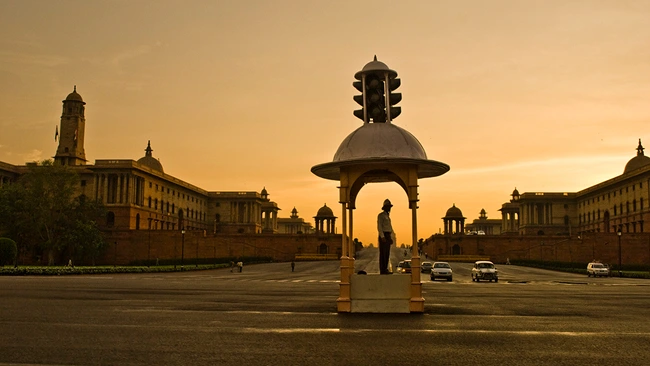 Arrival. Namaste! We are warmly welcomed the traditional Indian way with hands clapped together at the airport and transferred to our hotel. The remainder of the day is free to relax.
-
Day 2 - Delhi
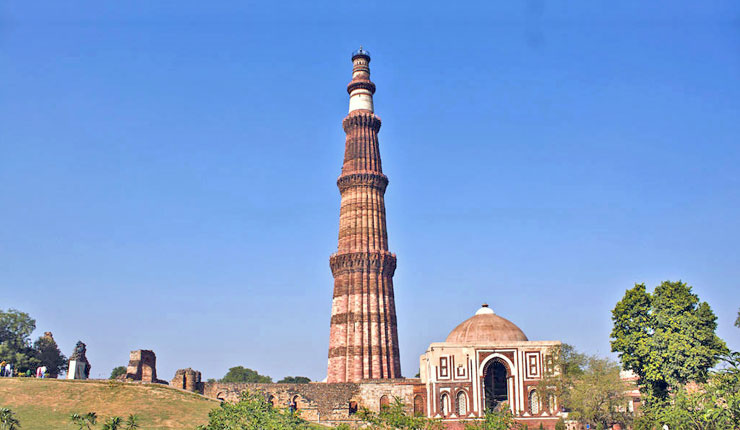
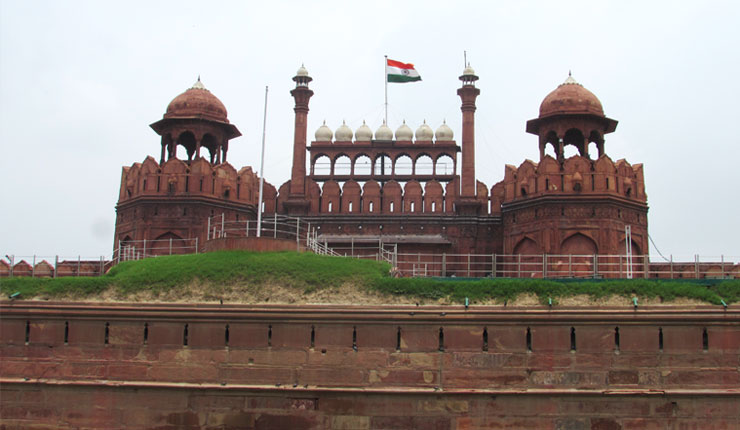
 We start our morning tour with New Delhi and visit Birla House, the Former Residence of Mahatma Gandhi before he was assassinated by Nathu Ram Godse on January 30, 1948. Later we visit the famous India Gate followed by the Houses of Parliament, Connaught Place and Humayun's Tomb*, the first garden-tomb on the Indian subcontinent, built in 1570. We continue to Qutub Minar and its Monuments* Built in the early 13th century the red sandstone tower of Qutub Minar is 72.5 m high. The surrounding archaeological area contains funerary buildings, notably the magnificent Alai-Darwaza Gate, a masterpiece of Indo-Muslim art and two mosques. Our afternoon concentrates on Old Delhi, starting with the Red Fort Complex*. Named for its massive enclosing walls of red sandstone, it is adjacent to an older fort, the Salimgarh, built by Islam Shah Suri in 1546, with which it forms the Red Fort Complex. The Red Fort is considered to represent the zenith of Mughal creativity which, under the Shah Jahan, was brought to a new level of refinement and each pavilion reveals architectural elements typical of Mughal building, reflecting a fusion of Persian, Timurid and Hindu traditions. After visiting the Red fort, we embark on a captivating journey on a Rickshaw passing through the narrow lanes of the famous Chandni Chowk Bazaar, it was originally built by Mughal Emperor Shah Jehan for his daughter Jahan Ara in 17th Century since then many changes have taken place however it still remains Old Delhi's one of the Oldest and busiest markets in Delhi. Finally end our rickshaw ride at Jama Masjid, Mughal majesty and India's largest mosque. After visiting the mosque, we proceed to Raj Ghat, the cremation site of Mahatma Gandhi. In the evening, we enjoy a welcome dinner at well-known Indian restaurant.
Please Note: Red Fort Complex and Birla House is closed on Monday while the shops in Chandni Chowk remains closed on Sunday for visitors.
-
Day 3 - : Delhi/Agra (Train)
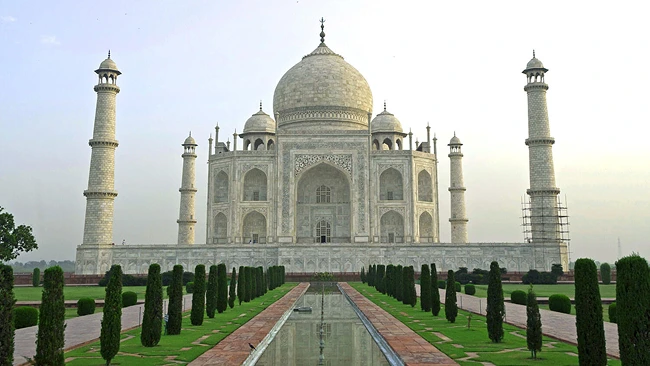
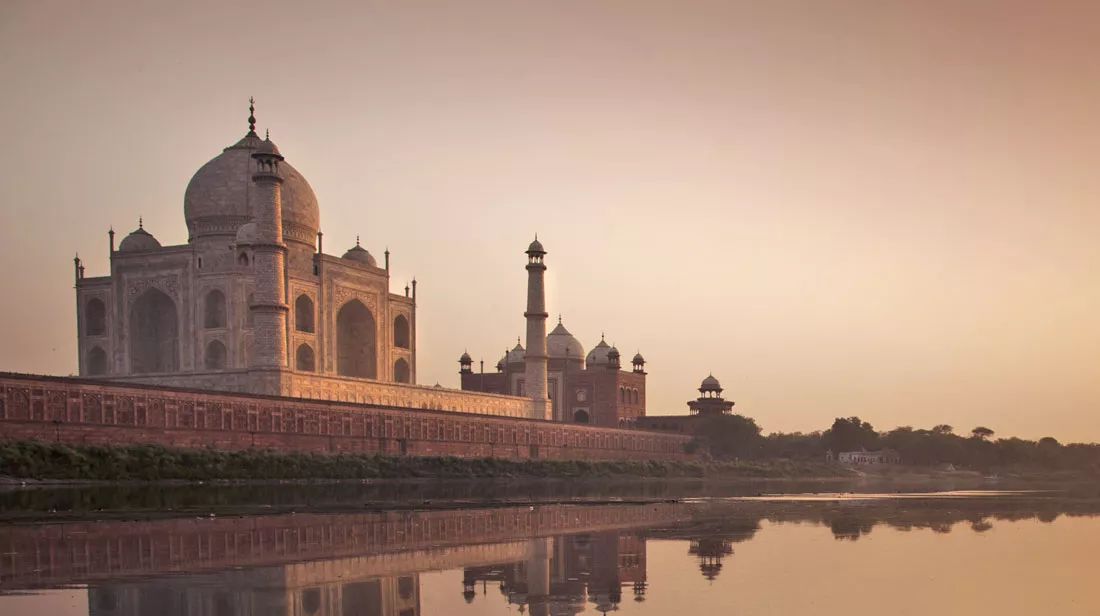 After breakfast we are transferred to railway station for our express train to Agra. Shatabdi Express trains are fully air-conditioned and travelers enjoy complimentary meals. On arrival in Agra, we are transferred to our hotel. Later we start our tour of Agra with a visit to one of the most well-known wonders of the world, the Taj Mahal*. An immense mausoleum of white marble, built in Agra between 1631 and 1648 by order of the Mughal emperor Shah Jahan in memory of his favorite wife, the Taj Mahal is the jewel of Muslim art in India and one of the universally admired masterpieces of the world's heritage. Situated on the right bank of the Yamuna in a vast Mogul garden, this funerary monument combines elements and styles of Persian, Central Asian and Islamic architecture.
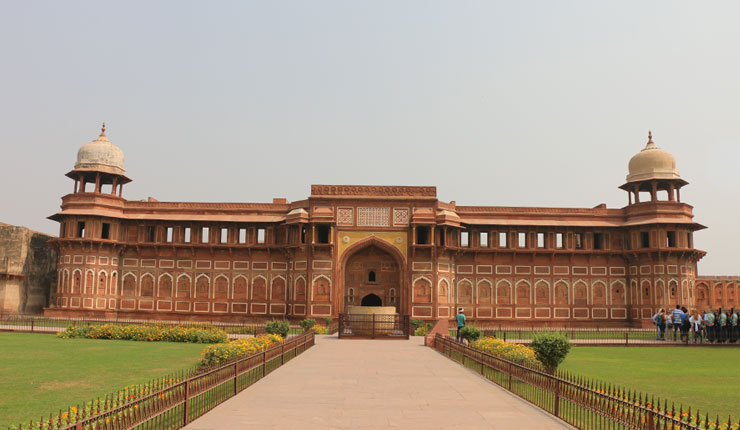
We then visit Agra Fort*. This powerful fortress of red sandstone encompasses, within its 2.5-km-long enclosure walls, the imperial city of the Mughal rulers. It comprises many fairy-tale palaces, such as the Jahangir Palace and the Khas Mahal, built by Shah Jahan; audience halls, such as the Diwan-i-Khas; and two very beautiful mosques. We also visit Itmad-Ud -Daulah, often referred to as the Baby Taj. A highly ornate edifice, this mausoleum is considered as the imminent precursor of the Taj Mahal in terms of elaborate carvings and inlay work are concerned. We end our tour visiting some of the local factories famous for marble inlay work and witness the complex art of inlaying precious and semiprecious stones on the marble from the Makrana Mines.
Please Note: Taj Mahal is closed on Fridays.
After breakfast we are transferred to railway station for our express train to Agra. Shatabdi Express trains are fully air-conditioned and travelers enjoy complimentary meals. On arrival in Agra, we are transferred to our hotel. Later we start our tour of Agra with a visit to one of the most well-known wonders of the world, the Taj Mahal*. An immense mausoleum of white marble, built in Agra between 1631 and 1648 by order of the Mughal emperor Shah Jahan in memory of his favorite wife, the Taj Mahal is the jewel of Muslim art in India and one of the universally admired masterpieces of the world's heritage. Situated on the right bank of the Yamuna in a vast Mogul garden, this funerary monument combines elements and styles of Persian, Central Asian and Islamic architecture.
We then visit Agra Fort*. This powerful fortress of red sandstone encompasses, within its 2.5-km-long enclosure walls, the imperial city of the Mughal rulers. It comprises many fairy-tale palaces, such as the Jahangir Palace and the Khas Mahal, built by Shah Jahan; audience halls, such as the Diwan-i-Khas; and two very beautiful mosques. We also visit Itmad-Ud -Daulah, often referred to as the Baby Taj. A highly ornate edifice, this mausoleum is considered as the imminent precursor of the Taj Mahal in terms of elaborate carvings and inlay work are concerned. We end our tour visiting some of the local factories famous for marble inlay work and witness the complex art of inlaying precious and semiprecious stones on the marble from the Makrana Mines.
Please Note: Taj Mahal is closed on Fridays.
- Day 4 - Agra/Bhopal (Train)
-
Day 5 - Bhopal/Excursion to Sanchi & Bhimbetka
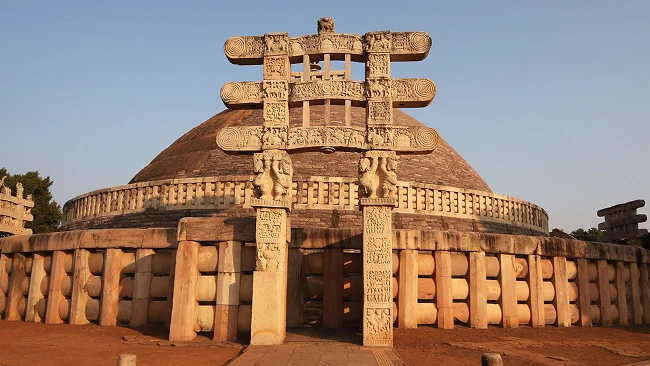
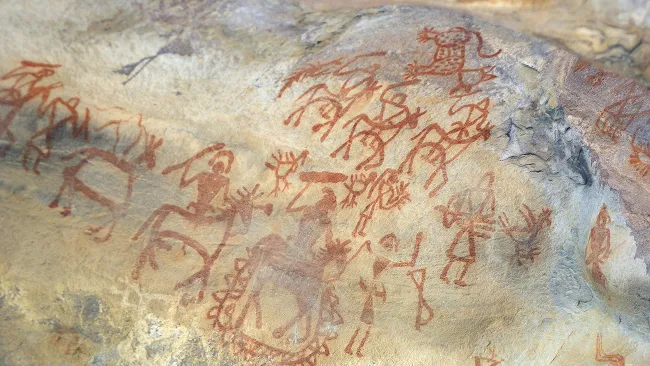
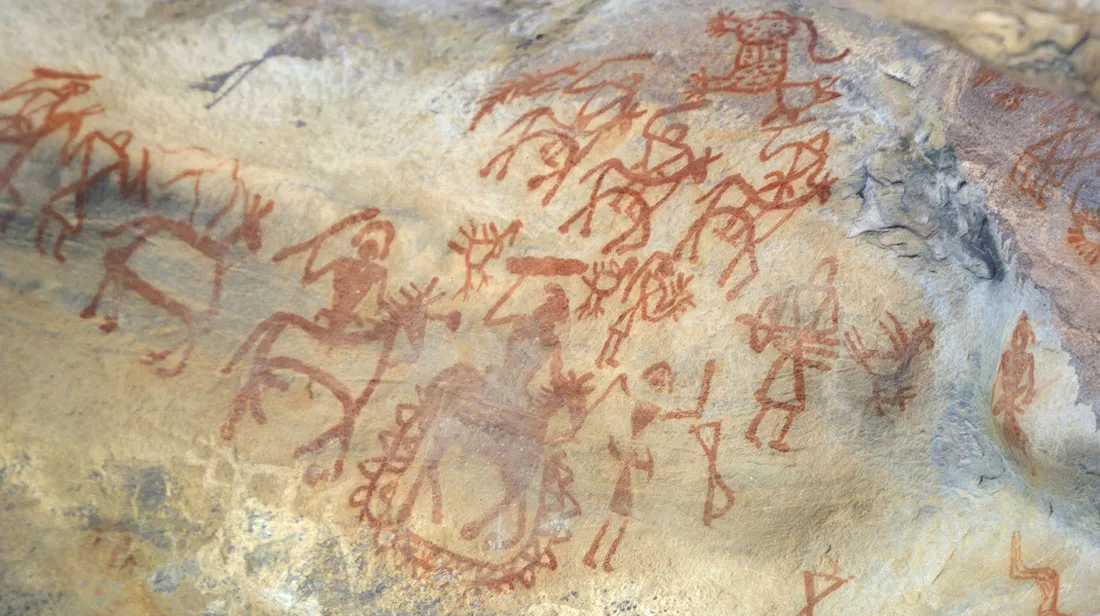 After breakfast we explore the Buddhist Monuments at Sanchi* consist of a group of monolithic pillars, palaces, temples and monasteries in different states of conservation, most of which date back to the 2nd and 1st centuries B.C. It is the oldest Buddhist sanctuary in existence and was a major Buddhist center in India until the 12th century A.D. On our way back, we visit Udaygiri Caves, a group of rock-cut cave sanctuaries carved into a sandstone hill from 4th and 5th centuries AD. In the afternoon we visit the Rock Shelters of Bhimbetka* in the foothills of the Vindhyan Mountains on the southern edge of the central Indian plateau. Within massive sandstone outcrops, above comparatively dense forest, are five clusters of natural rock shelters, displaying paintings that appear to date from the Mesolithic Period right through to the historical period. The cultural traditions of the inhabitants of the twenty-one villages adjacent to the site bear a strong resemblance to those represented in the rock paintings.
-
Day 6 - Bhopal/Ujjain/Indore (Drive 200 Kms / 04 Hrs)
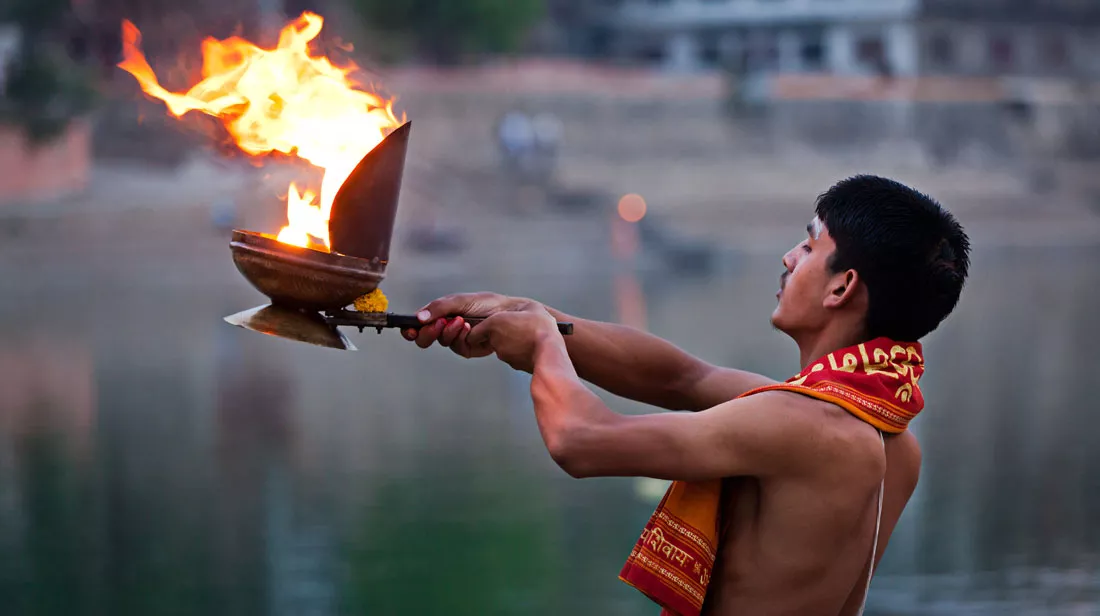 After breakfast we drive to Indore en-route visiting the Mahakaleshwar Temple in Ujjain. We arrive in Indore and visit the Kanch Mandir, an exquisite example with doors, pillars, ceilings and walls are entirely inlaid with glass with minute detailing. The temple also has paintings, which are depicting stories from the Jain scriptures. We then continue to Lalbagh Palace, one of the best neoclassical palaces in India.
-
Day 7 - : Indore/Mandu (Drive 100 Kms / 02 Hrs)
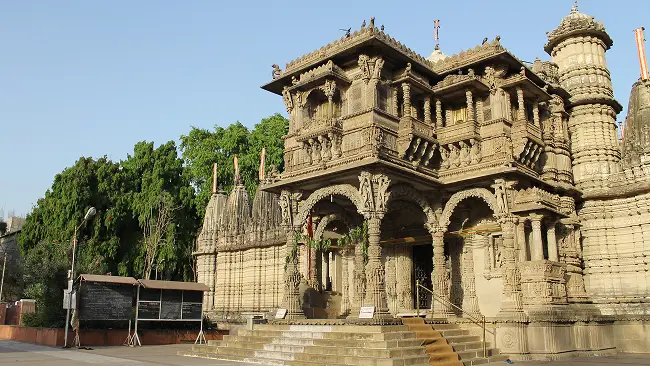
 After breakfast we drive to Mandu. The city was originally founded in the 11th century by the Parmar rulers who made it their fort capital. Mandu was conquered by the Delhi Sultans, who renamed it as Shadiabad, meaning the "City of Joy". Under Mughal rule, Mandu features some of the finest examples of Afghan architecture in India. We explore this beautiful town, visiting Jahaz Mahal, Taveli Mahal, Asharafi Mahal, Tomb of Hoshang Shah, the Jain Temple, Jama Masjid, Baz Bahadur’s Palace, Rupmati’s Pavalion, Darya Khan‘s Tomb and Nil Kanth Palace. After visit we procced to hotel & check in.
Overnight: Hotel in Mandu (1 night) (B)
-
Day 8 - Mandu/Ahmedabad (Drive 370 Kms / 07 Hrs)
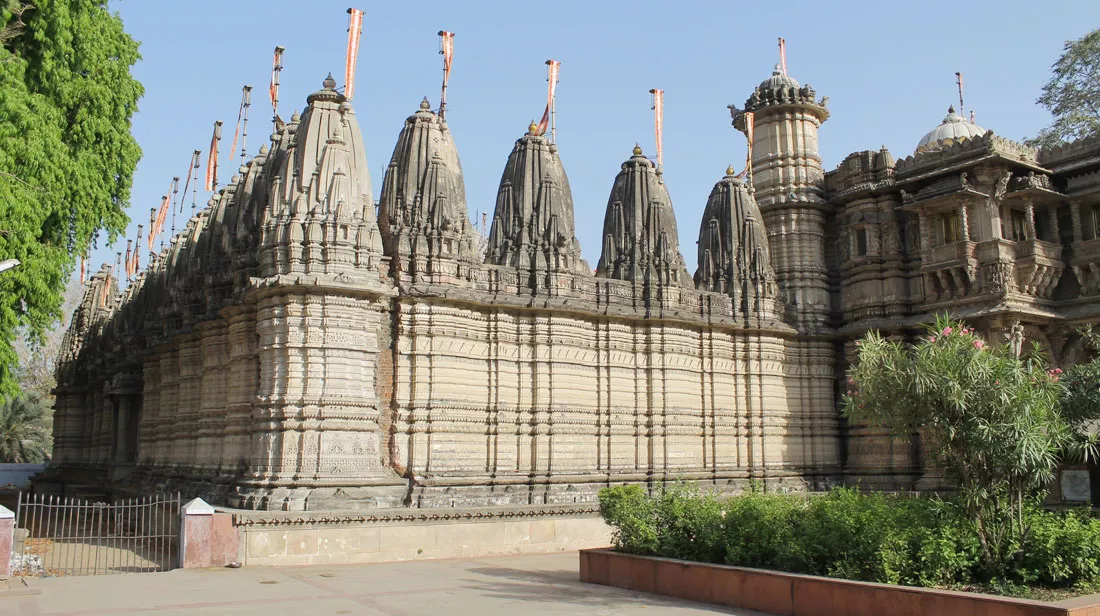 After breakfast we drive to Ahmadabad, the largest city of Gujarat. The city was founded by Sultan Ahmad Shah in 1411 AD and lies on the left bank of the Sabarmati River. On arrival we check in to our hotel. The remainder of the day is free.
-
Day 9 - Ahmedabad
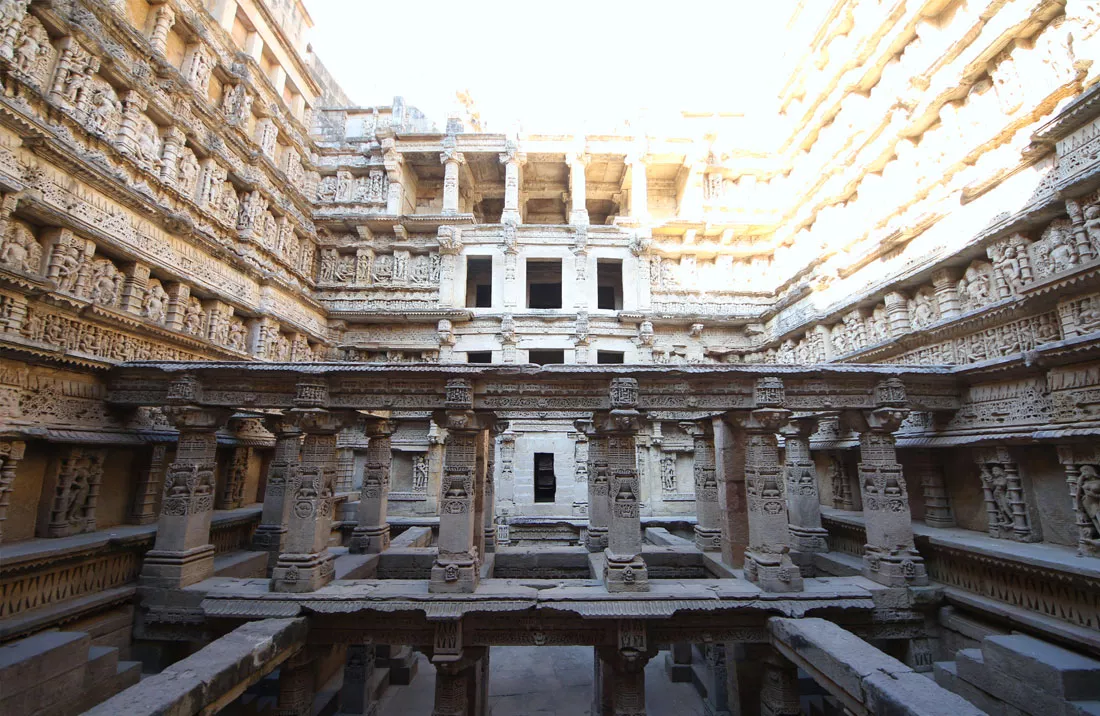 After Breakfast we visit Mahatma Gandhi's Sabarmati Ashram, formerly known as Satyagraha Ashram. It is situated on the west bank of Sabarmati River and houses a museum that features the largest number of original manuscripts of Gandhi's letters and articles that shook up the British Rule in India. Next, we visit the Siddhi Sayad Masjid and the Swaminarayan Temple. In the evening we are treated to the traditional Thali dinner.
-
Day 10 - Ahmedabad/Rajkot (Drive 225 Kms / 04 Hrs)
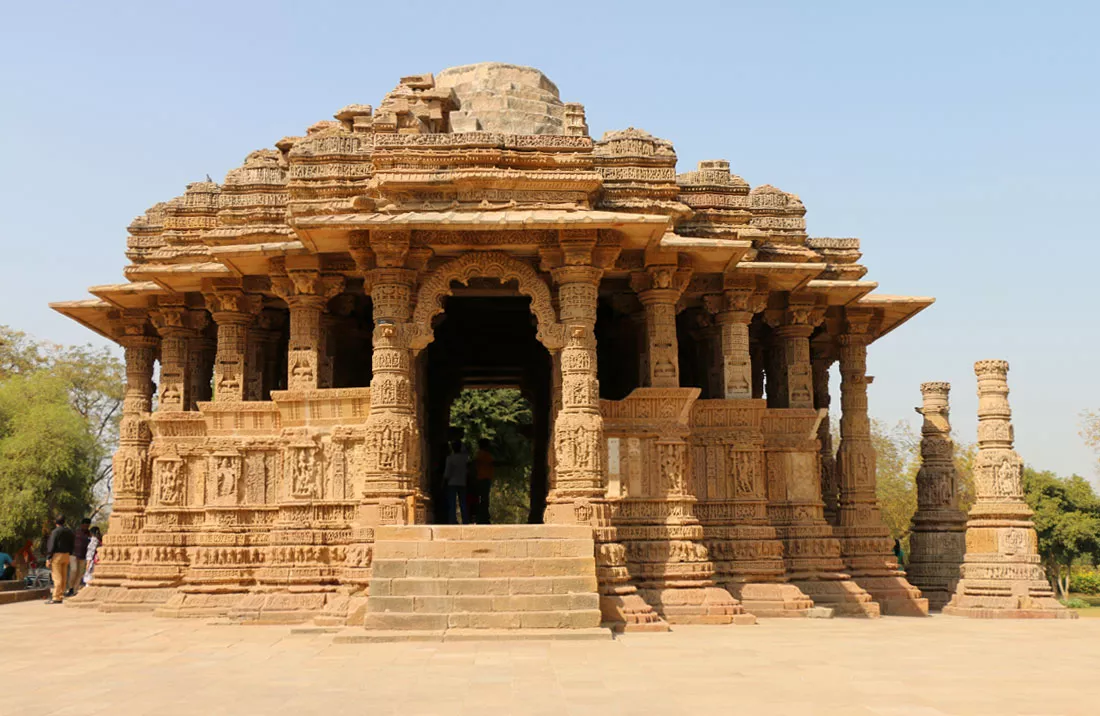 After breakfast we drive through rural Gujarat to Rajkot, to explore the former capital of the princely state of Saurashtra. We visit Kaba Gandhi No Delo, the ancestral house of Mahatma Gandhi where he spent his childhood, now converted into a Museum, Gandhi Smriti and Watson Museum.
Please Note: Museums at Rajkot are closed on Wednesdays for visitors. Kaba Gandhi No Delo remains closed on Sunday.
- Day 11 - Rajkot/Bhuj (Drive 250 Kms / 05 Hrs)
- Day 12 - Bhuj
- Day 13 - Bhuj/Mumbai/Aurangabad by Flight
-
Day 14 - Aurangabad
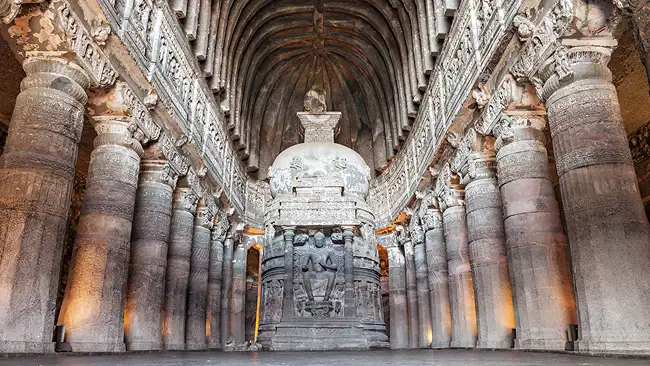
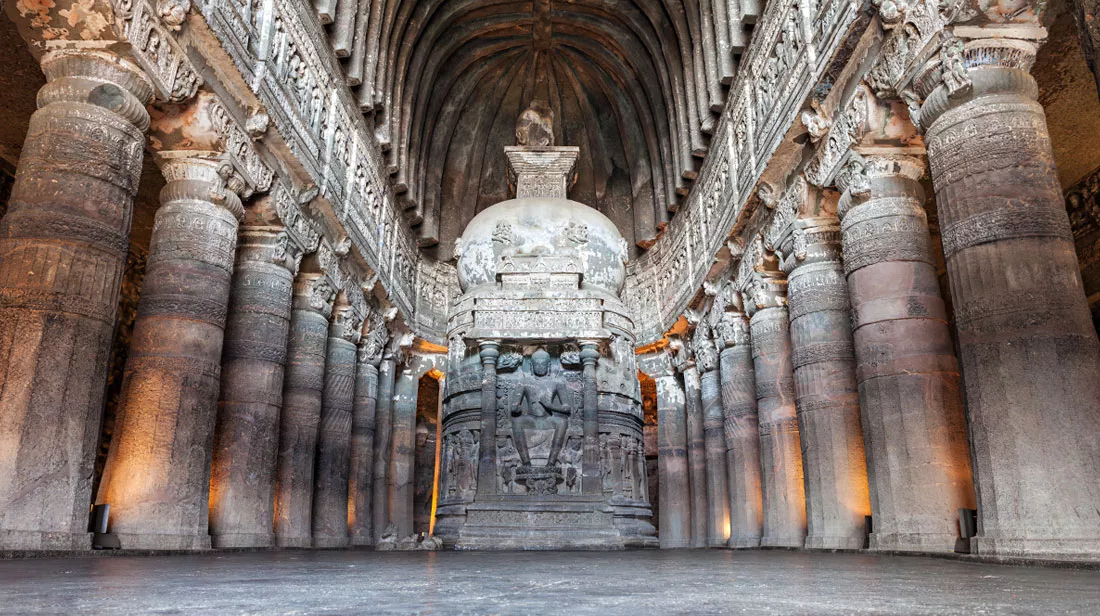 Today we take full day excursion to Ajanta Caves*. The first Buddhist cave monuments at Ajanta date from the 2nd and 1st centuries B.C. During the Gupta period (5th and 6th centuries A.D.), many more richly decorated caves were added to the original group. The series of paintings at Ajanta that cover the walls and ceilings are unparalleled in the history of Indian Art, both for the wide range of subjects illustrated and the assured mastery of the medium. The paintings and sculptures of Ajanta are considered masterpieces of Buddhist religious art.
Please Note: Ajanta Caves are closed on Monday for visitors
-
Day 15 - Aurangabad/Mumbai by Flight
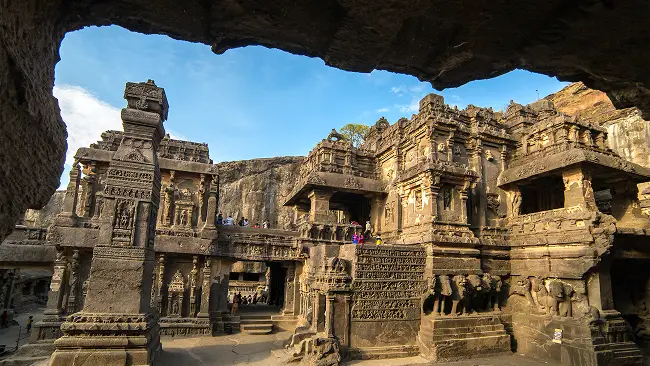
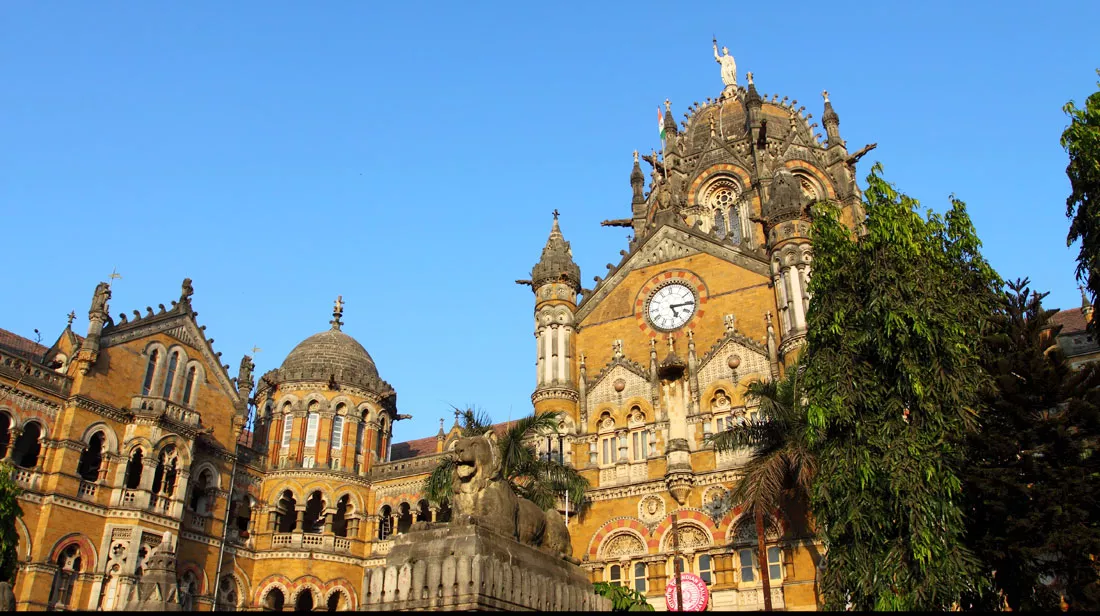 After Breakfast we start the visit of Ellora Caves*. These 34 monasteries and temples, extending over more than 2 km, were dug side by side in the wall of a high basalt cliff. The uninterrupted sequence of monuments dates from A.D. 600 to 1000 and brings the civilization of ancient India to life. Later we also visit the Daulatabad fort and Bibi-Ka-Maqbra, the beautiful mausoleum of Rabia-ul-Daurani, wife of the Mughal Emperor Aurangazeb. In the late afternoon we are transferred to airport for our flight to Mumbai. On arrival in Mumbai, we are transferred to our hotel.
Please Note: Ellora Caves are closed on Tuesdays for visitors
After Breakfast we start the visit of Ellora Caves*. These 34 monasteries and temples, extending over more than 2 km, were dug side by side in the wall of a high basalt cliff. The uninterrupted sequence of monuments dates from A.D. 600 to 1000 and brings the civilization of ancient India to life. Later we also visit the Daulatabad fort and Bibi-Ka-Maqbra, the beautiful mausoleum of Rabia-ul-Daurani, wife of the Mughal Emperor Aurangazeb. In the late afternoon we are transferred to airport for our flight to Mumbai. On arrival in Mumbai, we are transferred to our hotel.
Please Note: Ellora Caves are closed on Tuesdays for visitors
-
Day 16 - Mumbai
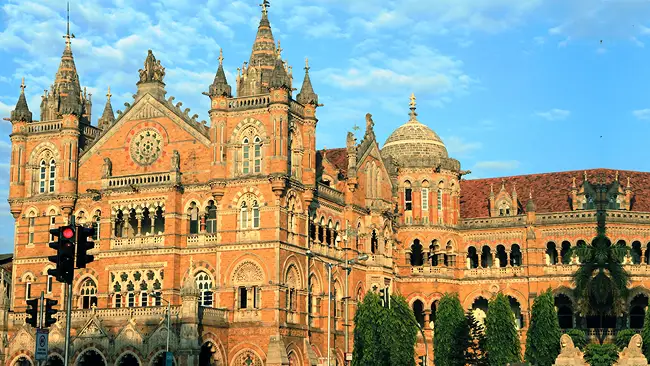
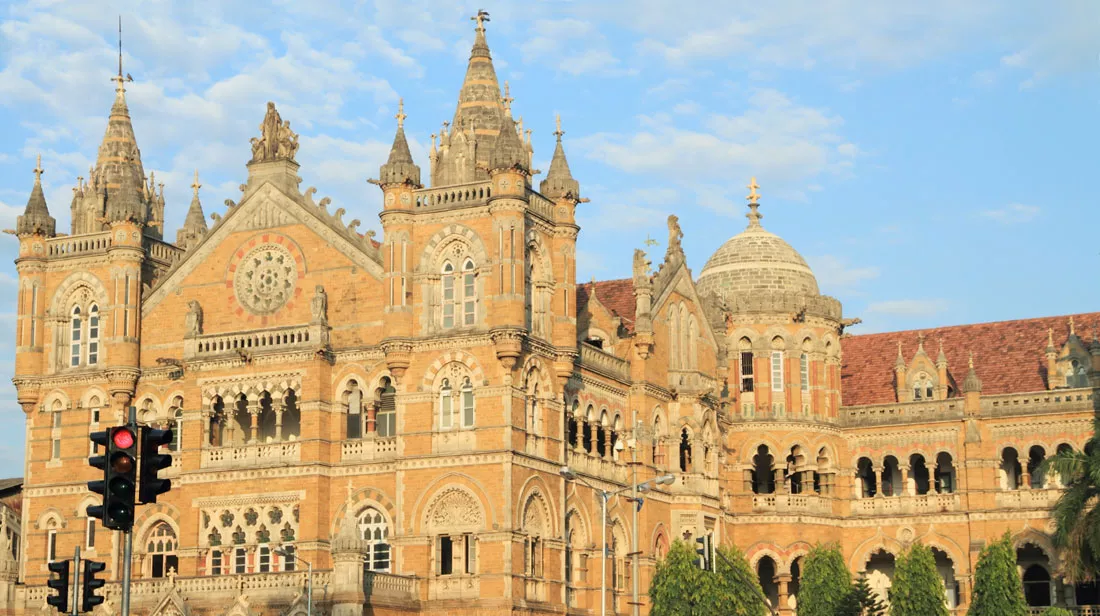 We start our day with a visit to the Gateway of India, Mumbai's most famous monument. Here we embark on our excursion to the Elephanta Caves*, located on an island in the Sea of Oman. The caves contain a collection of rock art linked to the cult of Shiva. Here, Indian art has found one of its most perfect expressions, particularly the huge high reliefs in the main cave. We return to Mumbai by motor launch and visit the Prince of Wales Museum and Chhatrapati Shivaji Terminus*, formerly known as Victoria Terminus Station, an outstanding example of Victorian Gothic Revival Architecture in India, blended with themes deriving from Indian traditional architecture. The building, designed by the British Architect F. W. Stevens, became the symbol of Bombay as the ‘Gothic City’ and the major international mercantile port of India. Its remarkable stone dome, turrets, pointed arches and eccentric ground plan are close to traditional Indian palace architecture.
Our next Stop is at Mani Bhawan, where Mahatma Gandhi stayed here during the Freedom Struggle. The house is now converted into a Museum. From here we leave for the Hanging Gardens, the Zoroastrian Towers of Silence, the bustling Crawford Market and drive past Haji Ali, the tomb of a wealthy Muslim merchant. We end our tour at the Dhobi Ghat, the world's largest outdoor laundry. The word Dhobi Ghat is used all over India to refer to any place where many washers are present. Please Note: Elephanta Caves are closed on Monday for visitors
- Day 17 - Mumbai/Onward Destination (Flight)
- - Breakfast
- - Lunch
- - Dinner
* DENOTES UNESCO WORLD HERITAGE SITES INCLUDED
 Loading accommodation…
Frequently asked questions
Common questions about this tour — expand any item for details.
- 01 Is tipping included and if not, how much should I budget?
- 02 Can I book extra nights of hotel accommodation before or after my tour?
- 03 Who are my travelling companions?
- 04 How many people can join a tour?
- 05 What are the age restrictions on your tours?
- 06 I'm a single traveler, will I be charged a single supplement?
- 07 Can you provide me with a list of the hotels we will be staying at?
- 08 Can I join a tour late or leave it early?
- 09 Are airport transfers included?
- 10 What type of ground transportation is used on your tours?
- 11 Do your tours include international airfare?
- 12 What clothing should I pack for one of your tours?
- 13 What vaccinations are recommended for this tour?
- 14 What is the most appropriate type of luggage to bring?
Traveller reviews
What guests say about India's Western Heritage.
Loading gallery…
Log in to view dates & prices
Please sign in or create an account to see departure dates, pricing, and book online.

Top Tours
Hand-picked journeys travellers loved most this season.
Loading top tours…
Great Experience of India's Western Heritage
Aug 2026